
7 Positive Behaviour Management Strategies Every Parent Should Know
Why does a simple “no” turn into a full-blown meltdown, even when you’re doing your best to stay calm? If you’re a new parent, teacher, or carer of a strong-willed child, that moment of helpless frustration will feel familiar. Tantrums, power struggles, and constant resistance can leave you questioning your approach and make you end up searching for strategies for positive behaviour management.
This guide breaks that cycle. It will help you with seven practical, research-informed strategies that support calmer behaviour, stronger self-control, and more cooperative routines without punishment or guilt. Each strategy addresses a real-life challenge, from managing transitions to handling stubborn refusals. Along the way, you’ll also discover why something as simple as choosing the right soft play centre in the UK can prevent overstimulation before emotions spiral. Read on to find tools you can use today, in real homes and real classrooms, with real children.
What is Positive Behaviour?
Positive behaviour is never about making children perfect, but it is about teaching children how to act, not reacting when things go wrong. In positive behaviour management, adults guide behaviour through clarity, consistency, and everyday reinforcement rather than correction or punishment. The focus stays on what you want to see more of, and you respond before small issues grow into bigger ones.
At its core, positive behaviour works because children feel safe, understood, and supported. When expectations stay clear and responses stay steady, children learn how to manage themselves over time, both at home and in learning spaces.
Positive behaviour management in children usually includes:
Positive reinforcement
Clear expectations
Consistent routines with the right indoor fun activities for kids.
Offering choices
Modelling behaviour
Acknowledging emotions
For example, instead of correcting a child after a disruption, you guide them toward the right action before frustration builds. This approach supports confidence, autonomy, and emotional security.
In the next section, we’ll look at how these principles turn into practical strategies you can use every day.
7 Positive Behaviour Management Strategies
Positive behaviour does not improve because children are told off more often. It improves when adults guide behaviour early, stay consistent, and respond in ways children can understand and repeat. These strategies work because they fit into daily life, not because they sound perfect on paper.
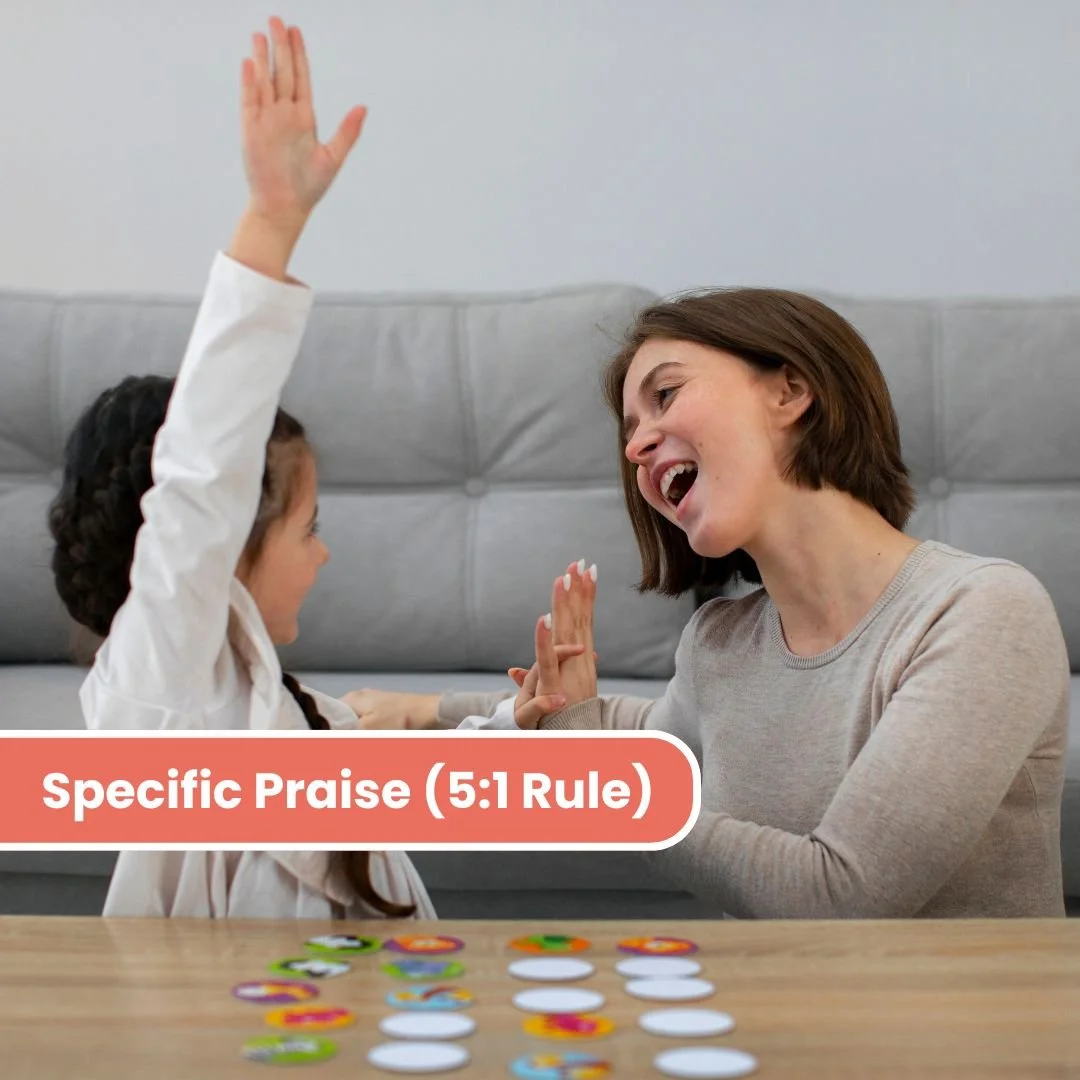
Children respond better when they know exactly what they did right. General praise feels incomplete, but specific praise gives direction.
Focus on the action you want repeated.
Say it immediately, not later.
Use five positive comments for every correction.
Example:
You may say something like, "You put your shoes away without being asked," rather than, "Good job. That was responsible."
Why it works:
Children learn which behaviour brings positive attention, and they repeat it naturally.
2. Positive Reinforcement for Building Habits
Remember, some behaviours need time to become a habit. Praise helps, but adding small rewards encourages consistency.
Use simple rewards like stickers, a snack they enjoy or extra story time.
Reward them on the basis of effort, not perfection.
Keep goals realistic.
Example:
A child earns a sticker each night they brush their teeth calmly. Five stickers lead to a park visit.
Why it works:
This strategy helps children stay motivated while habits slowly form.
3. Clear Expectations Using Visual Rules
Many tantrums start because children don’t fully understand what is expected of them.
Set only 3–5 rules.
Use pictures or simple words.
Repeat rules before activities begin.
Example:
A rule chart showing “Quiet voices”, “Hands to self”, and “Toys stay in play area” will help children to understand what is expected or needs to be done.
Why it works:
Children check the rule instead of testing limits.
4. Consistent Routines With the Right Play Zones
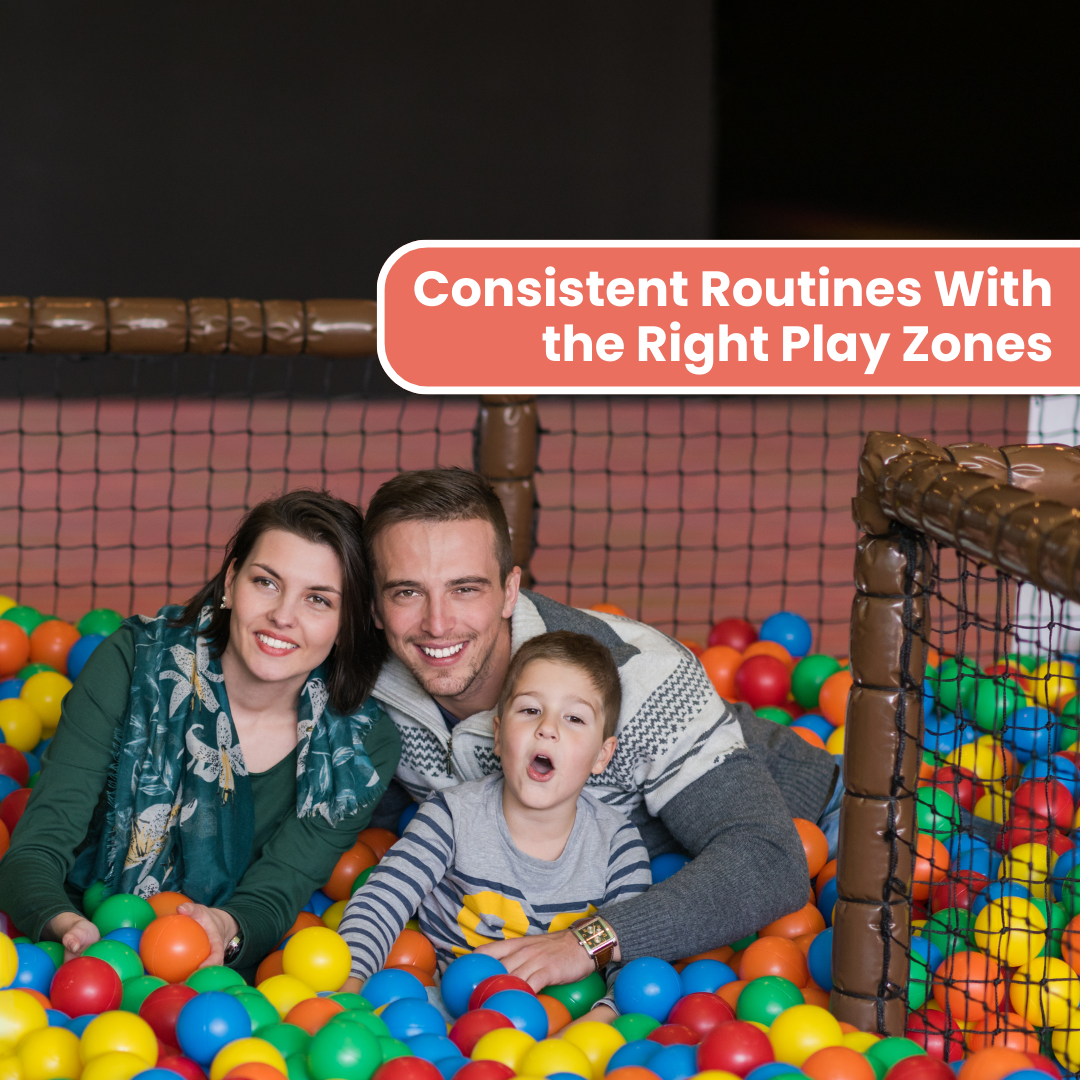
Unstructured play often leads to overstimulation. Children need spaces that match their energy, are safe and help them learn essential skills without making them feel like a task to be completed.
Active zones for encouraging movements.
Quiet zones for calming down.
Creative zones for increased focus.
Example:
With a soft play centre in Exeter, children start in an active zone, then move to a calm space for reading.
Why Do Parents Trust Wonderland Play?
Parents and educators trust Soft Play Centre in Newton Abbot because its play zones are designed by people who understand child behaviour, not just play equipment. Each zone follows clear safety standards, supports different energy levels, and encourages self-regulation through thoughtful layout and age-appropriate design. When children move through spaces that feel predictable and well planned, behaviour improves naturally. Adults don’t need to constantly correct or intervene because the environment does the guiding. This level of structure helps children stay engaged, calm, and confident during play, which is why families and schools continue to rely on Wonderland Play for consistent behaviour-friendly play spaces.
5. Offering Limited Choices
Children resist when they feel controlled. Choices reduce power struggles.
Offer only 2–3 acceptable options.
Stay calm and neutral.
Avoid open-ended questions.
Example:
"Do you want to clean up right now or in five minutes?"
Why it works:
Children feel involved while adults keep boundaries clear.
6. Modelling the Behaviour You Expect
Nobody is a bigger copycat than a child, so make sure you become a role model for the behaviour you expect them to develop.
Speak calmly, even during stress.
Show problem-solving out loud.
Demonstrate patience in real moments.
Example:
"I'm taking a breath before I speak because I'm feeling irritated."
Why it works:
Children learn behaviour by watching adults manage themselves.
7. Acknowledging Emotions and Teaching Regulation
Ignoring emotions makes behaviour worse. Naming feelings helps children calm down faster.
Acknowledge the feeling first.
Keep your words short.
Offer a simple coping tool.
Example:
“You’re upset the game ended. Let’s take a breath and choose what to do next.”
Why it works:
Children feel understood and learn how to manage emotions safely.
These strategies work best when used consistently and calmly, not all at once. In the next section, we’ll break down how to apply them step by step in daily routines so they stay manageable for busy parents and teachers.
How to Apply Positive Behaviour Strategies?
Positive behaviour works best when it fits into daily routines. Instead of correcting behaviour repeatedly, you guide children at predictable moments. Here’s how to use the strategies at key points of the day.
Morning Routine (15–20 minutes)
Mornings often feel rushed, which triggers resistance. Start by guiding behaviour early.
Specific praise: As your child wakes, say, “You opened your eyes calmly. That’s a good start.”
Clear expectations: Keep a visual chart by the bed showing “Brush teeth → Breakfast → Shoes”.
Offering choices: “Oatmeal or eggs?” “Backpack first or lunchbox?”
Busy tip: Prepare the chart the night before.
Result: calmer mornings and smoother school drop-offs.
Mealtime or Breakfast (10–15 minutes)
Food battles usually come from pressure or unclear limits.
Positive reinforcement: Offer a sticker for trying one new bite.
Model behaviour: Eat calmly and say, “This apple is crunchy. I like it.”
Acknowledge emotions: “You don’t like broccoli. That’s okay. Try a small bite.”
Clear expectations: Use a placemat rule such as “Food stays on the plate.”
Busy tip: pre-cut food to avoid delays and try new recipes.
Result: Less waste and more cooperation at the table.
Playtime or After-school activity (20–30 minutes)
Unstructured play often leads to chaos. Zones like Wonderland play create balance.
| Time | Activity Type | Purpose |
|---|---|---|
| 0–15 min | Active (balls, jumping) | Release energy |
| 15–30 min | Creative (blocks, puzzles) | Build focus |
| 30+ min | Quiet (books, drawing) | Calm down |
Announce: "Play zone time now!"
Play zones offer choices within the zone, such as “Blocks or puzzles?”
Use specific praise like, “You stayed in your zone and finished stacking. WELL DONE!”
Result: Independent play with expert supervision.
Evening Wind-Down or Bedtime (15–20 minutes)
Evenings need a calm structure, not negotiation.
End with low lighting and books.
Model calm behaviour by reading slowly and softly.
Acknowledge emotions: “You’re tired. Let’s sit close.”
Reinforce routines with small rewards, such as extra cuddle time.
Busy tip: Use an audio timer for stories.
Result: Faster settling and easier sleep.
Start Small Roadmap
Week 1: Choose one routine and apply three strategies.
Week 2: Add play zones across the day.
Track progress: Use a simple checklist.
Professional reminder: Stay calm. Your tone sets the pace. Consistency matters more than perfection, and steady routines show results over time.
Conclusion
Positive behaviour does not come from fixing everything at once. It comes from steady, thoughtful choices made every day. In this guide, we explored how positive behaviour management works through clear expectations, consistent routines, meaningful praise, calm modelling, and well-planned play zones. Each strategy supports children in learning how to manage their actions, emotions, and energy in ways that feel natural and achievable.
What matters most is the environment you create. When children move through spaces that guide behaviour, offer structure, and allow choice, cooperation follows with far less resistance. Whether at home or in a classroom, these approaches help reduce tantrums, improve focus, and build confidence over time. You don’t need perfection. You need consistency and a plan that fits real life.
Start small. Choose one routine and apply one or two strategies today. To make it easier, download the Play Zone schedule available on the Wonderland Play website and the 7-Strategy Tracker and keep your progress visible. Which strategy will you try first? Share this guide with another parent or teacher who could use calmer, more predictable days.
Frequently Asked Questions
-
The 5 R’s usually refer to rules, routines, relationships, reinforcement, and regulation. Together, they help children understand expectations, feel secure, and learn how to manage their behaviour consistently over time
-
The 4 P’s are Predictable, Positive, Proactive, and Purposeful. These focus on preventing behaviour issues by setting clear expectations, encouraging good behaviour, and responding calmly rather than reacting late
-
Behaviour management techniques include positive reinforcement, clear expectations, consistent routines, offering choices, modelling behaviour, and acknowledging emotions. These methods guide behaviour instead of controlling it through punishment.
-
The 5 R’s of parenting often stand for Respect, Responsibility, Resilience, Relationships, and Regulation. They help parents raise children who feel secure, confident, and capable of managing emotions and actions.
-
The 5 R’s of leadership commonly include respect, responsibility, relationships, resilience, and results. These principles support trust, clear communication, and consistent guidance within teams and organisations.