
30 Fun Fine Motor Skills Activities to Improve Preschoolers Development
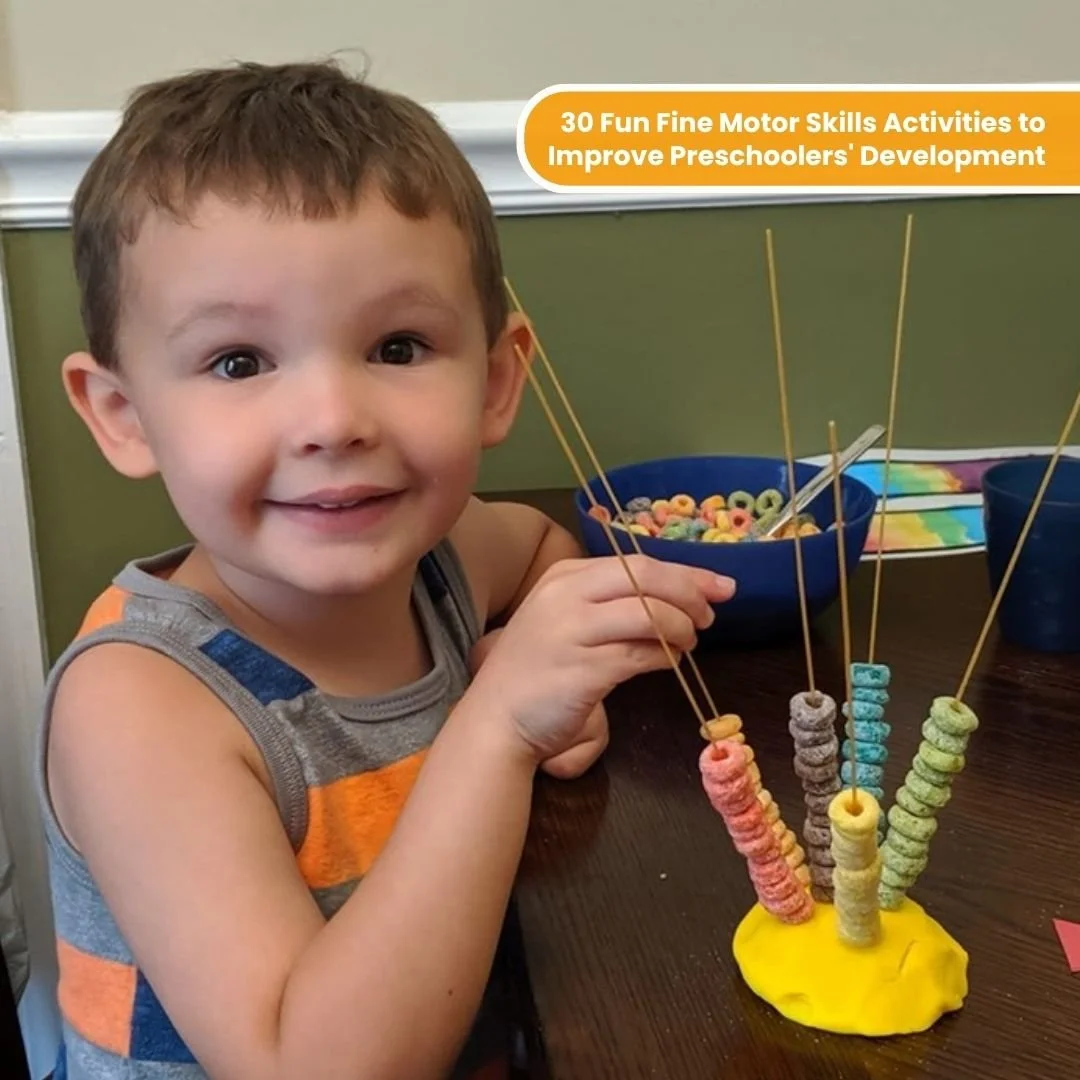
Watch a 3-year-old try to do up their own coat zip for the first time, and you'll see exactly why fine motor skills activities matter. It's messy. It's frustrating. And it takes real hand strength and control that most of us stopped thinking about the moment we mastered them.
If you're a parent, childcare provider or nursery practitioner wondering how to help a preschooler build hand and finger skills without turning playtime into a lesson, you're in the right place. The good news is that you don't need worksheets, flashcards or expensive kits. Everyday objects like pegs, pasta, playdough, and even a sponge and a bowl of water can do the job just as well, often better.
This guide walks through 30 genuinely different activities, what each one helps develop, and how active play fits into the bigger picture too.
What Are Fine Motor Skills?
Fine motor skills are the small, controlled movements of the hands, fingers and wrists that let your child grasp, manipulate and control objects or things, like holding a crayon, doing up buttons or picking up a raisin between thumb and forefinger.
They're different from gross motor skills, which cover the bigger movements: running, jumping, and climbing. A kid needs both, but fine motor control tends to develop more slowly, simply because it demands more precision.
A Few Abilities Sit Under This:
Finger and hand strength
Pincer grip (thumb and forefinger control)
Hand-eye coordination
Wrist rotation and stability
Bilateral coordination, using both hands together, each doing something different
None of this happens overnight, and it doesn't happen at the same pace for every child either.
Why Hand-eye Coordination Matters at This Age?
Hand-eye coordination is an important skill for young children because it helps them use their hands correctly while watching what they are doing. Everyday indoor play activities for kids such as drawing, cutting, threading beads, turning pages, using a spoon, building with blocks, and fastening a coat all depend on this ability.
Regular practice makes these tasks easier and helps your children become more independent. It can also reduce their frustration and build confidence as they learn to complete activities by themselves. Soft play sessions for toddlers often include games, crafts, puzzles, and practical activities to strengthen these skills.
Why Are Fine Motor Skills Important in Preschoolers?
Hand-eye coordination is not only connected to early handwriting. It supports a much wider range of abilities, including dressing, eating, playing, creating, and organising objects. Giving your children plenty of opportunities to practise through enjoyable activities helps prepare them for everyday life and future learning.
30 Fun Fine Motor Skills Activities for Children
A quick answer first, for anyone short on time: the best fine motor activities for preschoolers include playdough, threading, peg games, drawing, puzzles, construction toys, cutting and sticking, tweezers, cooking and gardening, all using items most households already have.
Here's the full list, grouped so you can pick something that suits the moment, whether that's a rainy afternoon or ten spare minutes before dinner.
Easy Activities Using Everyday Items
1. Playdough Shape Challenge
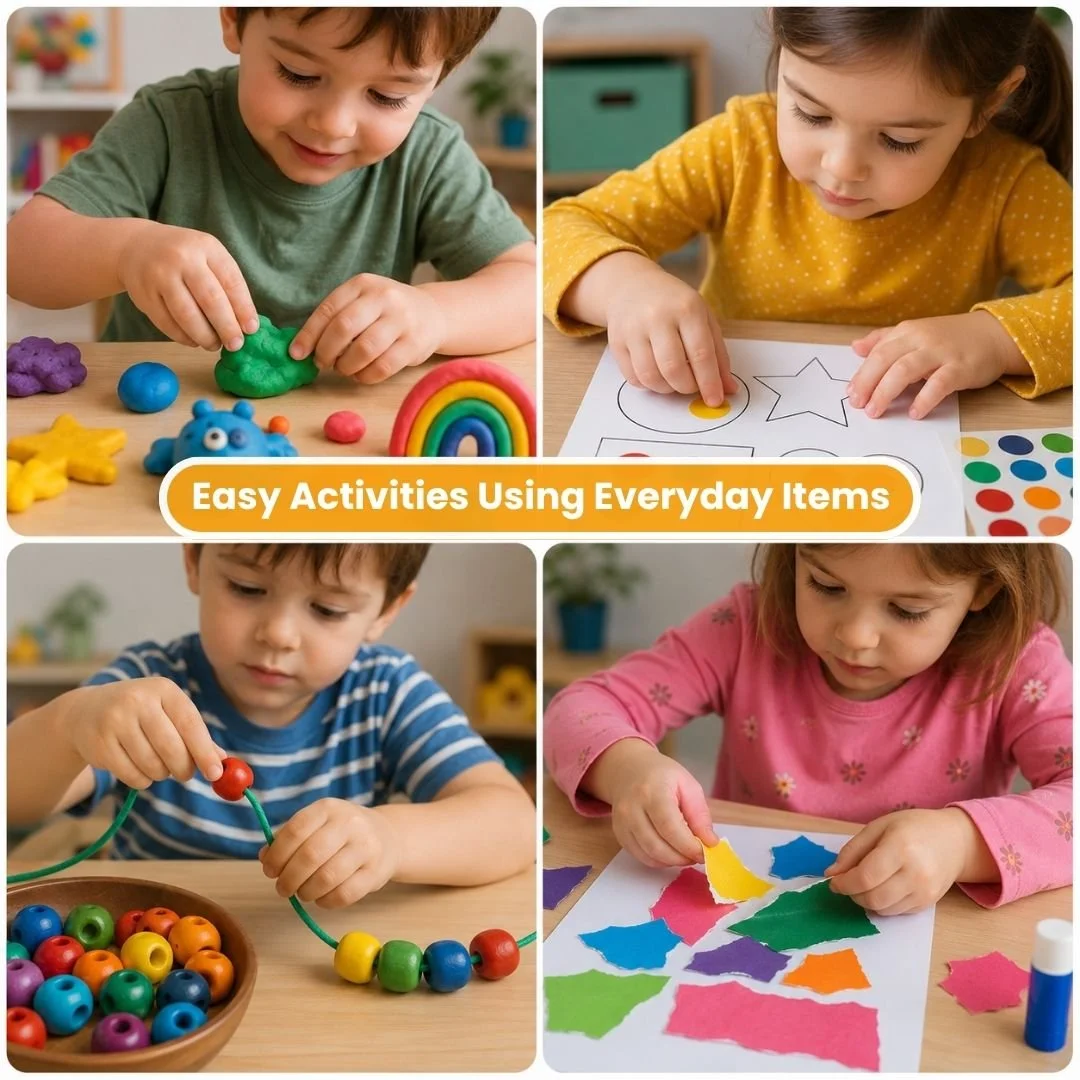
Rolling, squeezing and pinching playdough into shapes. It builds finger strength and hand control in your kid. You should warm the dough slightly first, cold playdough is harder for small hands to work with, and in this, your supervision is need in the stating of few days.
2. Sticker Matching Games
Children peel stickers and place them on matching outlines, improving hand–eye coordination and placement accuracy. This activity strengthens fine motor skills in your child by developing the pincer grip, finger control, hand strength, and precision needed for writing, drawing, and other everyday tasks.
3. Threading Beads Onto String
Give large, child-safe beads and a stiff string or shoelace to thread through each bead. This activity improves hand-eye coordination and strengthens fine motor skills by developing finger control, grip, precision, and hand muscle strength.
4. Tear-and-paste Collage
Tearing paper into pieces and sticking them onto card. Builds finger strength in a way that feels more like art than exercise.
5. Peg Picture Boards
Colourful pegs around the edge of a board or piece of card. Genuinely one of the best grip-strengtheners going, and cheap to set up.
Creative Activities That Build Finger Control
6. Tweezer Treasure Hunt
Hide small, age-appropriate objects for children to pick up with kitchen tongs or child-safe tweezers. Sharpens precision and pincer control.
7. Sponge Squeezing Game
Give your child a sponge, a bowl of water and an empty container. Ask them to soak the sponge, squeeze out the water and fill the container.
This simple game strengthens the fingers and hands while improving grip, hand-eye coordination and wrist control. These skills support everyday tasks such as writing, buttoning clothes and using scissors.
8. Finger Painting
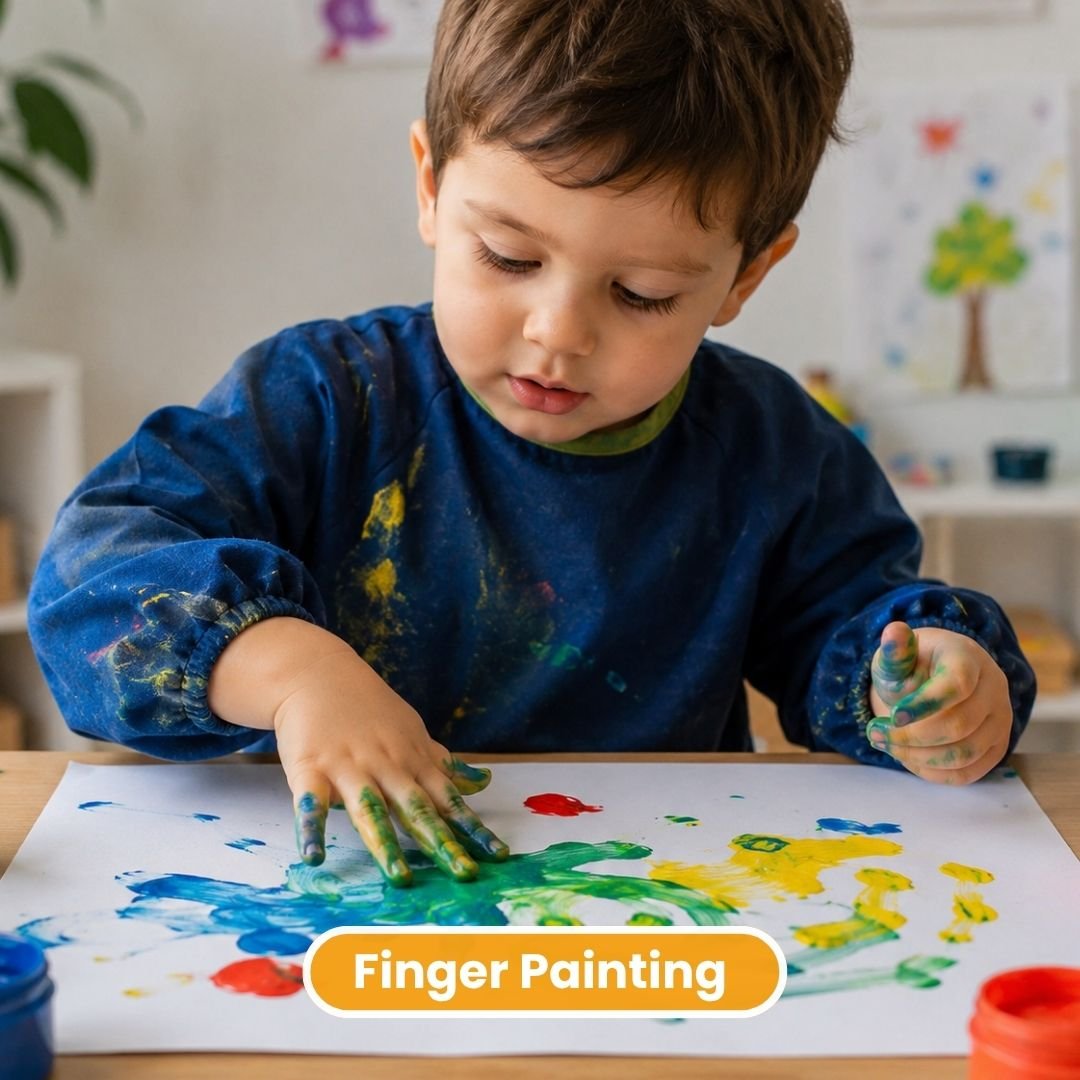
Lines, dots, swirls, whatever comes to mind. Supports finger isolation, the ability to move one finger independently of the others.
9. Lacing Cards
Threading a lace through holes punched around a card shape. Builds bilateral coordination, since one hand feeds while the other guides.
10. Rice or Sand Tracing
Drawing letters or shapes in a shallow tray of rice or sand. A gentle, low-pressure way to practise the movements behind early writing.
Activities That Prepare Children for Writing
11. Nuts-and-Bolts Play
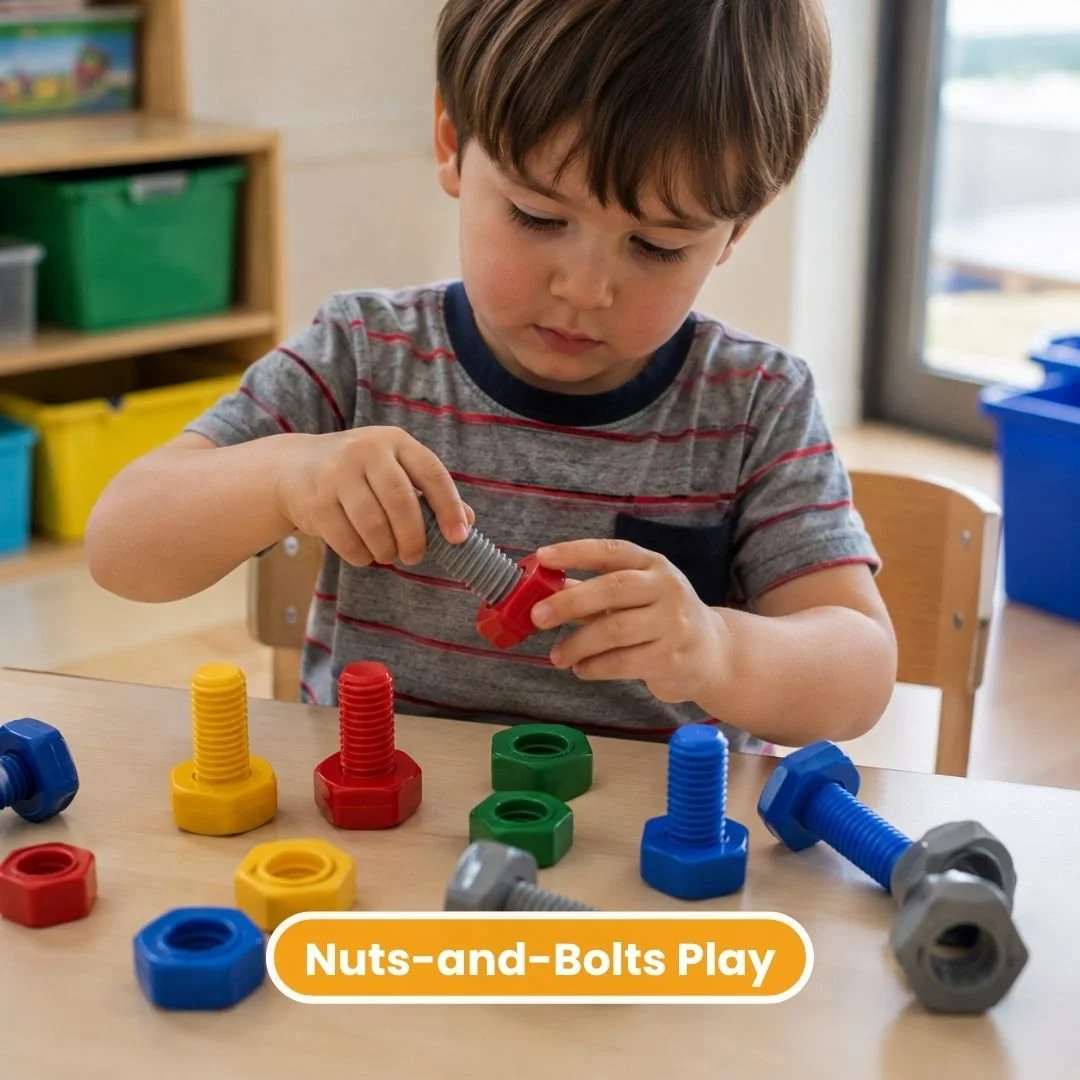
Large, child-safe nuts and bolts encourage children to twist, turn and fit pieces together, strengthening their fingers, wrists and hand muscles. This improves hand–eye coordination and builds the fine motor control needed for activities such as holding a pencil, writing and using scissors.
12. Build a Block Tower
Stacking blocks of different sizes, aiming for height or a wobble-free finish. This trains controlled, deliberate hand movement in your child.
13. Button Practice Board
Fastening and unfastening large buttons on a board or old cardigan. Also genuinely useful for getting dressed.
14. Kitchen Pretend Play
Stirring, scooping, pouring, serving with a toy tea set. Encourages controlled hand and wrist movement in a context children already enjoy.
15. Scissor Snipping Practice
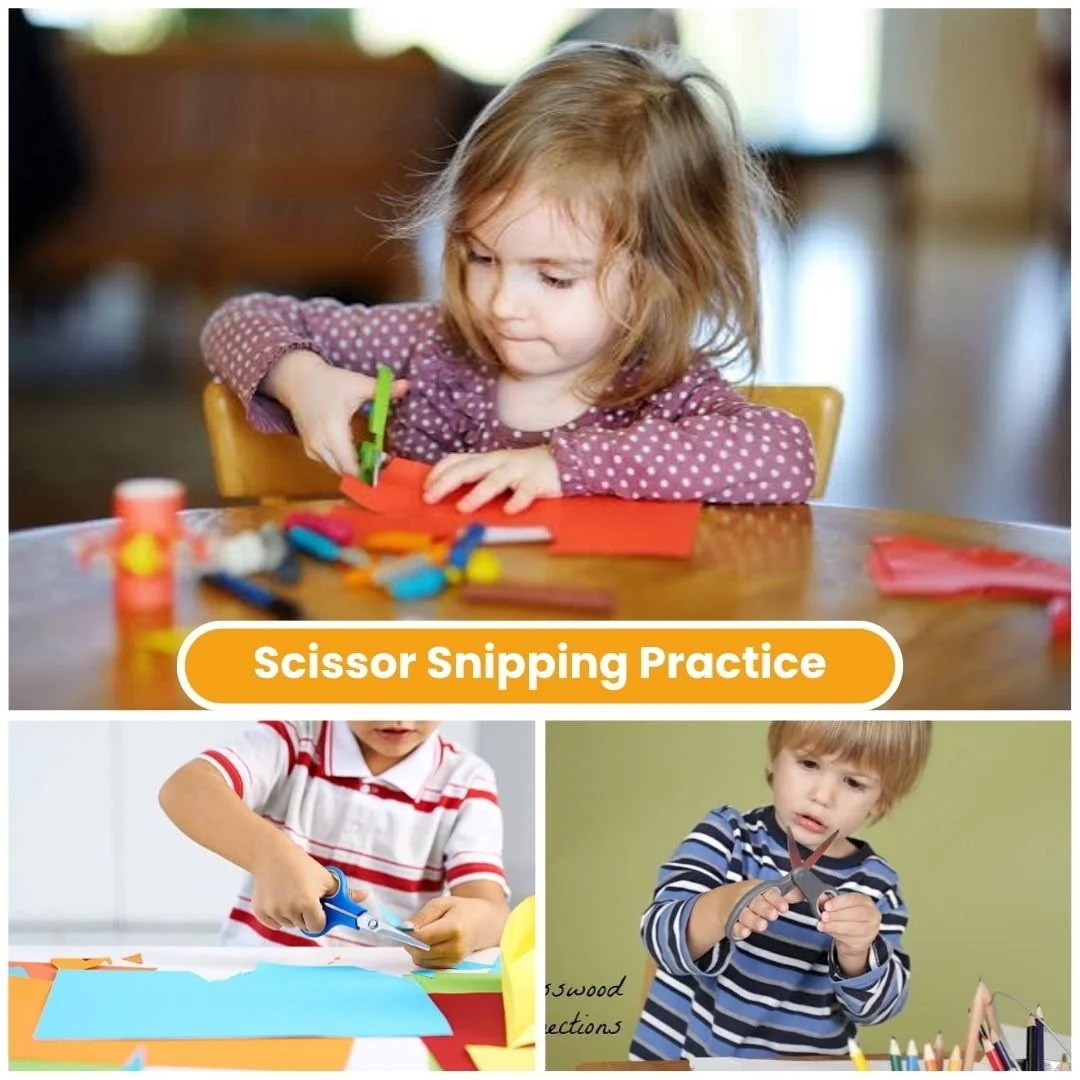
Give your child child-safe scissors and strips of paper to practise cutting. Begin with simple snips, then progress to cutting along straight lines.
This activity strengthens the small muscles in the hands and fingers while improving hand-eye coordination, grip, control, and concentration, essential fine motor skills for writing, drawing, and dressing.
Active, Game-Based Activities
16. Nature Sorting Tray
Sorting leaves, pinecones or smooth stones by size or colour, always under supervision. This builds controlled grasping in your toddler.
17. Clothespin Colour Match
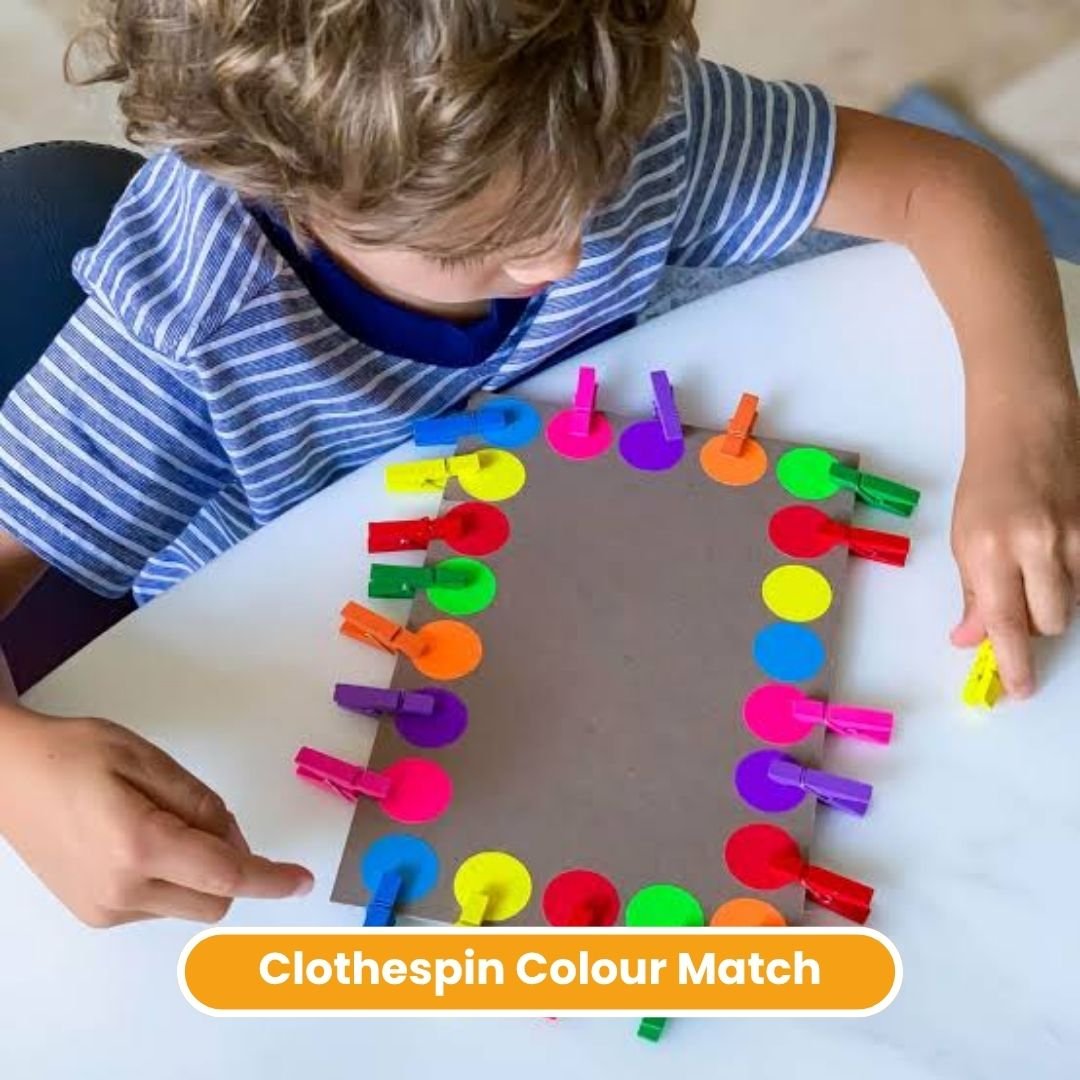
Clipping pegs onto cards of the matching colour. A twist on activity five that adds a bit of problem-solving.
18. Simple Jigsaw Puzzles
Picking up, turning and fitting pieces. This activity supports visual-motor coordination, matching what the eyes see to what the hands do.
19. Marble Painting
Rolling paint-covered marbles across paper inside a shallow box, with close supervision throughout. Builds controlled hand movement while feeling more like play than practice.
20. Pasta Necklace Making
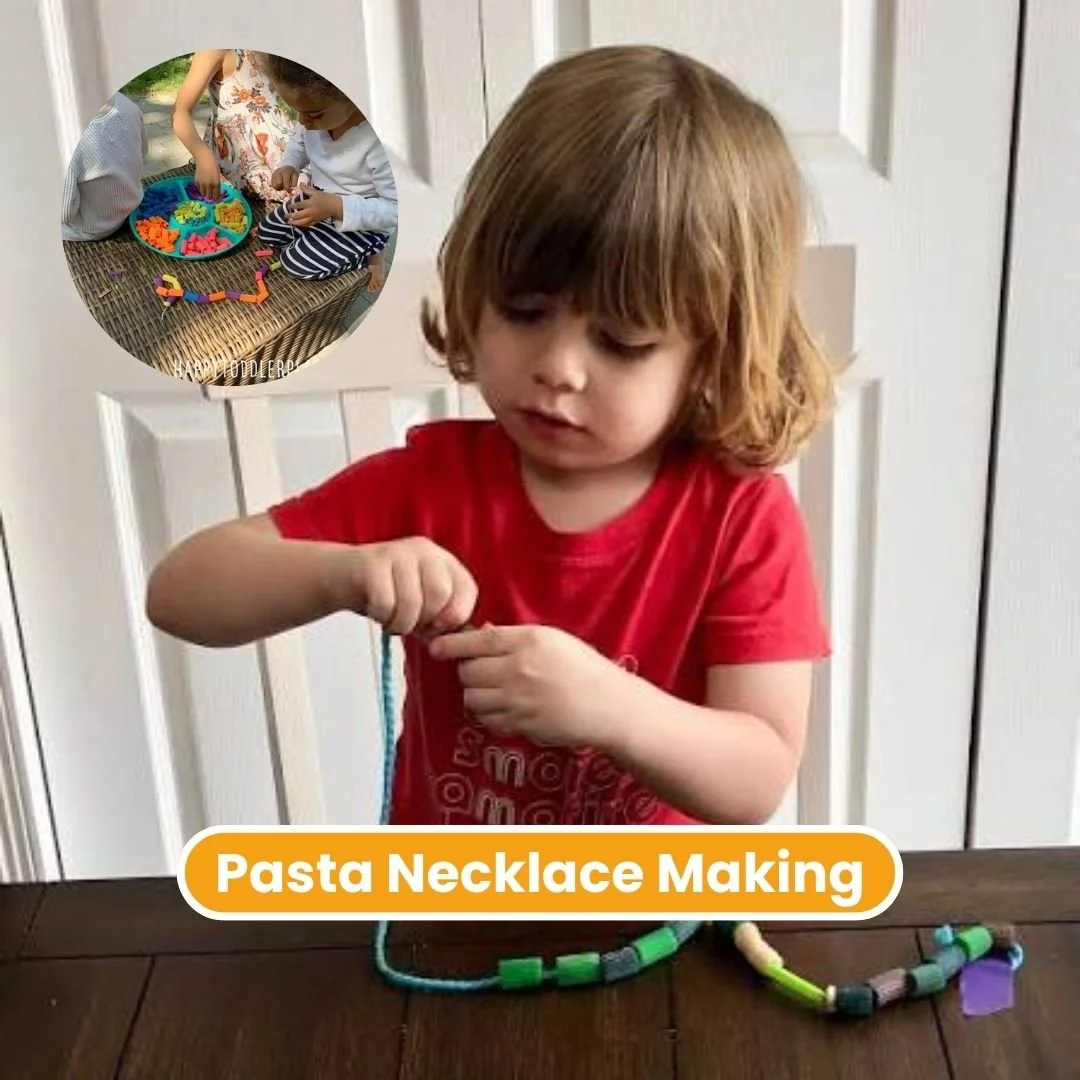
Pasta necklace making involves threading large pasta onto thick string to create a colourful, wearable necklace. This simple activity strengthens children’s fine motor skills by improving hand–eye coordination, finger control, grip, and concentration as they handle and thread each piece.
Pretend-Play Activities That Strengthen Little Hands
21. Chalk Drawing on a Board
Chalk drawing on a board lets children practise shapes, paths and simple pictures while enjoying creative play. Chalk’s thick grip is easier to hold, making it a useful step before using pencils.
It strengthens the fingers and hands, improves hand-eye coordination, and helps children develop better control and ability for writing.
22. Coin Posting Game
Children post large play coins or tokens through a slot in a piggy bank or in a box, strengthening hand-eye coordination, precision, and wrist control. This activity develops fine motor skills by encouraging children to grasp, hold, align, and release objects using their fingers and hands.
23. Shape Tracing
Tracing around simple shapes with a crayon or pencil. Direct practice for the grip and control needed for writing is eventually needed.
24. Water Dropper Art
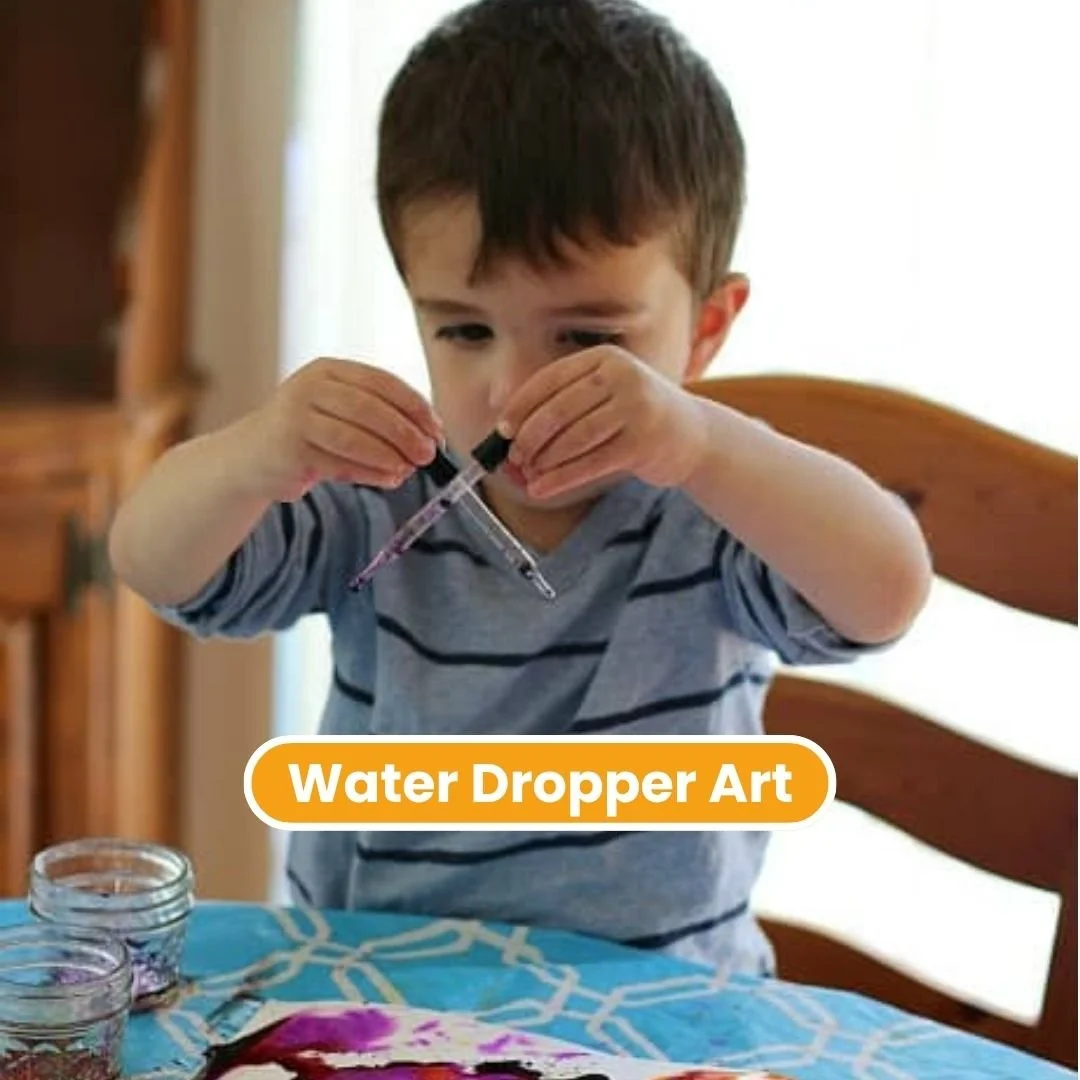
Children use a child-safe dropper to move coloured water between containers. This simple activity strengthens the finger muscles needed for a pincer grip and improves hand-eye coordination.
At Wonderland Play Centre, children can enjoy similar activities that make developing fine motor skills fun and engaging.
25. Magnetic Tile Building
Connecting and pulling apart magnetic tiles to build structures. It supports grasping in your child and manipulation, and it's genuinely absorbing for a lot of children.
Building, Puzzles and Everyday Problem-Solving
26. Open-and-Close Containers
Fill a basket with jars, tubs and boxes featuring different lids, and let your child practise twisting, pulling and opening them. This simple activity strengthens the fingers and hands, improves hand-eye coordination, and builds the fine motor control needed for writing, dressing and other everyday tasks.
27. Puppet Play
Your child can use simple hand puppets to create characters, act out stories, and express their imagination. Moving the puppets strengthens their fingers and hands, improving grip, coordination, and other fine motor skills through enjoyable play.
28. Dough Cutting and Decorating
Dough cutting and decorating uses child-safe cutters and tools with playdough or salt dough, helping children build hand strength through varied pressing, rolling, and cutting movements.
These activities develop fine motor skills by improving finger control, hand eye coordination, dexterity, and the ability to use both hands together, skills needed for writing, drawing, and everyday tasks.
29. Draw-the-Path Games
Simple mazes or winding roads to trace with a crayon. It improves pencil control and hand-eye coordination in your child.
30. DIY Busy Board
A board fitted with zips, buckles, switches and latches, made under adult supervision. One board and several different hand movements are useful for keeping your preschooler engaged for longer.
Fine motor skills can be developed through outdoor play, too. Simple playground activities encourage children to use their hands, grip, balance and coordination in different ways. For more creative ideas, explore our guide to 15 Backyard Playground Ideas for Kids and turn your outdoor space into a fun learning place.
How Soft Play Helps Build Fine Motor Skills?
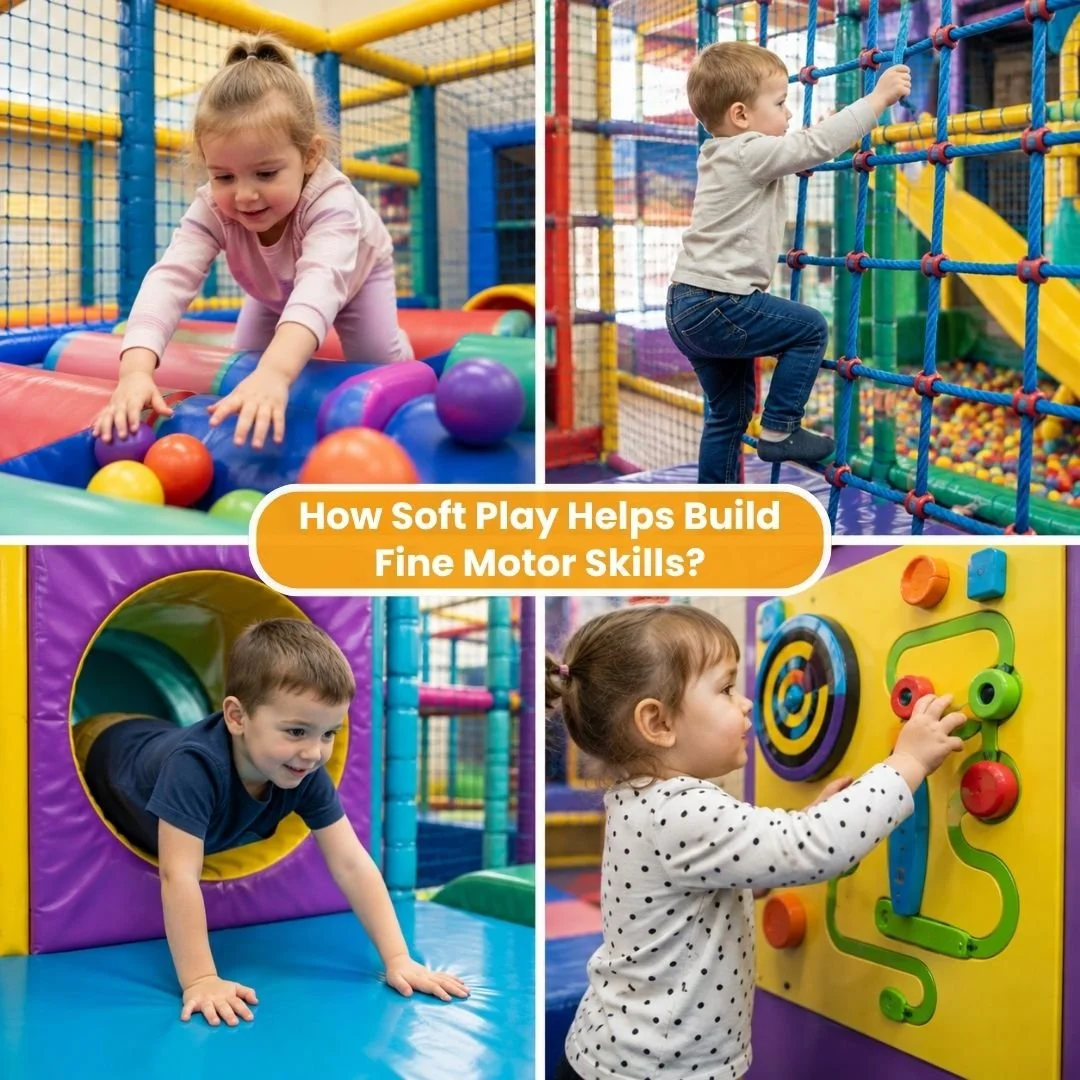
Fine motor development doesn't only happen at a table. Active, whole-body play has a role too, even if it's a less obvious one.
Reaching, Grabbing and Holding
At the soft play zone in Exeter, children naturally use their hands while moving through soft play toys and equipment, gripping rails, grabbing balls, and holding onto ropes as they climb. None of it looks like "practice", but the hand muscles are working all the same.
Climbing and Pulling Build Hand Strength
When your child pulls themselves up a slope or grips a climbing net, they develop real strength in their fingers and forearms, strength that carries over to everyday tasks, from holding a pencil to opening a jar.
Crawling and Moving Through Equipment
Navigating tunnels and obstacles asks the eyes, hands and body to work together, which is really just hand-eye coordination wearing a different outfit.
Interactive Features Encourage Purposeful Hand Movement
Spinners, buttons, sliders – the soft play zone in Newton Abbot increasingly builds these in, and children tend to return to them again and again without any prompting.
Conclusion
None of this needs to feel like homework. A tub of playdough, a handful of pegs, a sponge in a washing-up bowl — these small, ordinary moments do more for a child's hand strength and coordination than any structured drill ever could. Mix in some proper active play now and then, and preschoolers pick up these skills the way they pick up most things at that age: through doing, not through being told.
Looking for a fun way for your child to move, explore and build these skills through active play? Come and visit us at Wonderland Play for a playground trampoline and let your preschooler discover bounce and soft play fun for themselves.
Frequently Asked Questions
-
Fine motor skills are the small, controlled movements of the hands and fingers that let a child grasp, hold and manipulate objects — for example, holding a crayon, picking up food, or fastening a button. They develop gradually through everyday practice and play.
-
There isn't one single best activity. A variety works better than repetition. Playdough builds strength, threading builds coordination, and scissor practice builds control. Mixing several types keeps a preschooler interested and covers more ground.
-
Offer short, varied activities to your child throughout the week rather than long sessions. Threading, peg games, drawing, simple puzzles and pretend cooking are all easy to set up at home with things you already own.
-
Fine motor skills involve small, precise hand and finger movements, such as writing or buttoning a coat. Gross motor skills involve larger whole-body movements, such as running, jumping or climbing. Both develop alongside each other and support overall physical development.
-
Yes, indirectly. Reaching, gripping, pulling and manipulating equipment during soft play builds hand strength and coordination, which supports fine motor development alongside more targeted table-top activities.