
7 Calm down Activities for 5 Year Olds Before Bedtime
Why does your five-year-old seem to find a second wind exactly when it's time for bed?
You've had a long day. They've had a long day too, running around the garden, refusing their dinner, and negotiating over the night suit. And yet the moment the lights dim, something switches on. Suddenly they're doing star jumps on the landing, or asking why the sky is dark, or insisting they need one more glass of water.
If that sounds familiar, you're not doing anything wrong. Plenty of five-year-olds hit this stage where tiredness and energy seem to collide. The good news is you don't need an earlier bedtime or a stricter tone to fix it. What usually helps is a short run of calm-down activities for 5 year olds that give their brain and body time to slow down before the lights go out. Below are seven that genuinely work, plus a simple routine to string them together.
Why Do 5-Year-Olds Need Calm-Down Activities Before Bed?

Calm-down activities help five-year-olds shift from active daytime behaviour into a quieter state their bodies need for sleep. Children this age don't switch off the way adults might expect them to. Their brains have been processing new information all day – at school, at nursery, in the playground, and at bedtime, which asks them to go from a hundred miles an hour to zero in the space of ten minutes. That's a big ask for anyone, let alone someone who's five.
A predictable wind-down period signals, gently and repeatedly, that bedtime is on its way. It's less about the activity itself and more about the pattern. Do the same special play activities for kids in the same order most nights, and a child starts to anticipate what comes next without being told.
Quiet activities work better here than energetic ones. Chasing games or trampolining an hour before bed can leave a child more alert, not less, however tired they seemed beforehand. Paediatricians recommend a calm, consistent bedtime routine involving quiet activities such as reading or a warm bath, along with reduced screen time in the run-up to sleep. It's sensible advice, and most parents find it holds up in practice.
7 Best Calm-Down Activities for 5-Year-Olds

A good calm-down activity for a five-year-old is quiet, low in stimulation, and easy to repeat night after night. Reading, gentle breathing, soft music and drawing all tend to work well because they slow the pace without feeling like a chore. Even a play session at Wonderland Play Zonecan help your child with these calm-down activities, which lead them into a peaceful sleep. Here are seven worth trying.
1. Read a Short Bedtime Story
This one's a classic for good reason. Choose something familiar and gentle rather than a new, exciting title that might spark questions and delay sleep further. Letting your child pick between two books gives them a small sense of control, which can ease resistance without opening the door to a longer negotiation. Keep the room quiet and softly lit while you read.
2. Try Simple Breathing Exercises
Indoor play activities for children, like slow breathing, sound like an adult concept, but children pick it up quickly when it's made playful. "Smell the flower, blow out the candle" is an easy way in: breathe in through the nose as if smelling something lovely, then blow out slowly through the mouth. Two or three minutes is plenty. Don't turn it into a performance or a target to hit, the aim is to slow things down, not add pressure.
3. Do Gentle Stretching
A few soft stretches, reaching up towards the ceiling, touching toes, and rolling shoulders, can release some of the physical fidgetiness that builds up over a day. Keep the movements slow and small. This isn't the moment for a workout, and if it starts turning into jumping about, that's usually a sign it's time to move on to something quieter.
4. Listen to Calm Music or an Audio Story
Soft instrumental music or a gentle audio story can work brilliantly as background sound while your child settles. Keep the volume low and choose something with no sudden changes in tempo. Many families find it helpful to use the same track or playlist each night, so it becomes another familiar cue that bedtime is close.
5. Try Quiet Drawing or Colouring
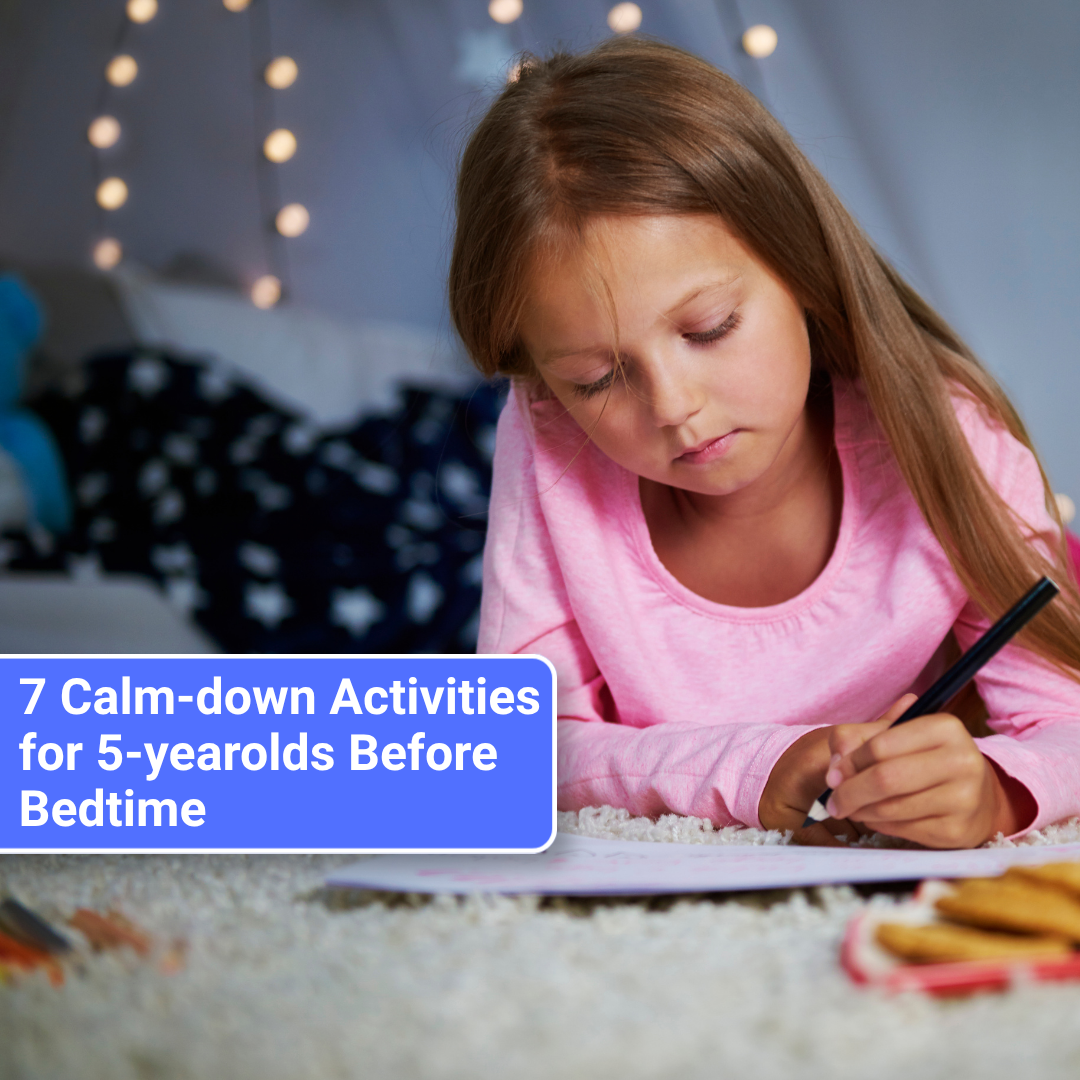
Colouring books, a few crayons and a comfortable spot on the bed can hold a five-year-old's attention without winding them up. Steer clear of anything competitive or overly exciting, like timed drawing games. Dim the lighting slightly if you can, since bright overhead light can work against the calming effect you're going for.
6. Have a Quiet Chat About the Day
Sitting together for a few minutes and asking simple, open questions, like "What was your favourite bit of today?" or "What are you looking forward to tomorrow?" gives your child space to talk through anything on their mind. Five-year-olds often save their worries for bedtime, when the day finally goes quiet enough for them to surface. A short chat here can prevent those worries turning into a stalling tactic later.
7. Try a Simple Gratitude or "Goodnight" Routine
Naming one good thing from the day, or saying goodnight to a favourite teddy, toy, or even the window, creates a small, predictable sequence that tells your child the day is properly ending. It doesn't need to be elaborate. In fact, the simpler and more repeatable it is, the more effective it tends to become over time.
If you're looking for more ways to keep your child active and engaged earlier in the day, so that bedtime naturally feels like the right moment to slow down, take a look at our other guides on indoor activities and screen-free play for young children.
How Can You Build These Activities Into a Bedtime Routine?

You don't need to use all seven activities every single night, and trying to squeeze them all in can backfire, turning a calm wind-down into another rushed task on the list. Pick two or three that suit your child and your evening, or you can visit a play session at a soft play zone in Exeter UK, then keep the order roughly the same.
A useful structure to follow:
Start winding down at a similar time each evening.
Move from active play to quiet play to bedtime activities, in that order.
Offer your child small choices, such as which story or which pyjamas, to reduce pushback.
Keep screens and highly stimulating games out of the last 30 to 60 minutes.
Make sure the bedroom itself is comfortable, dim and quiet.
Talk your child through the routine during the day so bedtime doesn't feel like a surprise.
Expect some nights to go smoothly and others not to. That's normal.
Try this: a simple 20–30 minute wind-down routine
Tidy toys away together.
Wash, brush teeth, and put on pyjamas.
Two to three minutes of breathing or gentle stretching.
A short bedtime story.
A brief goodnight chat.
Lights out.
Once this becomes familiar, many parents notice bedtime takes less negotiating, even if it never becomes entirely effortless.
Points to Remember
Calm-down activities help a five-year-old move from an active day into a settled bedtime.
Reading, breathing exercises, gentle stretching and quiet drawing all support this transition.
Keep the bedroom comfortable, quiet and dim.
Choose 2–3 calm activities, rather than trying to use all seven.
Keep the order and timing of the routine roughly the same each evening.
Cut out screens and high-energy play in the final stretch before bed.
Every child responds differently, so it's worth experimenting to see what actually settles yours.
Conclusion
Bedtime doesn’t have to turn into a nightly negotiation. A short run of quiet activities for kids before bed, paired with a routine your child can predict, tends to make far more difference than an earlier bedtime or a firmer voice ever will. After an active day, perhaps including a visit to a soft play zone in Newton Abbot UK, helping children slow down with calming play, stories or gentle music can make the transition to sleep feel much easier.
Try a couple of these ideas this week, notice what your child responds to, and adjust from there. Some nights will go better than others, and that’s completely normal. What matters is the pattern, not perfection.
Frequently Asked Questions
-
There isn't one single best option, but reading a familiar story or trying a short breathing exercise tends to work well for most children. The consistency matters more than the specific activity, so pick something your child enjoys and stick with it most nights.
-
Start winding down at a similar time each evening, moving from active play to quiet play and then into bedtime activities like a story or gentle chat. Keep screens and exciting games out of the last half hour, and offer small choices to reduce pushback.
-
Steer clear of high-energy physical play, such as running or rough-and-tumble games, and keep screens like tablets and television out of the wind-down period. Both tend to raise alertness at the exact point you want your child to be settling.
-
There's no fixed rule, but somewhere between 20 and 30 minutes suits most families. What matters more than the exact length is keeping the sequence familiar, so your child knows roughly what comes next.
-
It's a genuine pattern, not misbehaviour. Tiredness can sometimes make children more wired rather than sleepier, especially if the transition from active play to bedtime happens too quickly. A gradual wind-down tends to prevent this "second wind" effect.