
10 Amazing Things Your Child Can Learn From a Soft Play Session
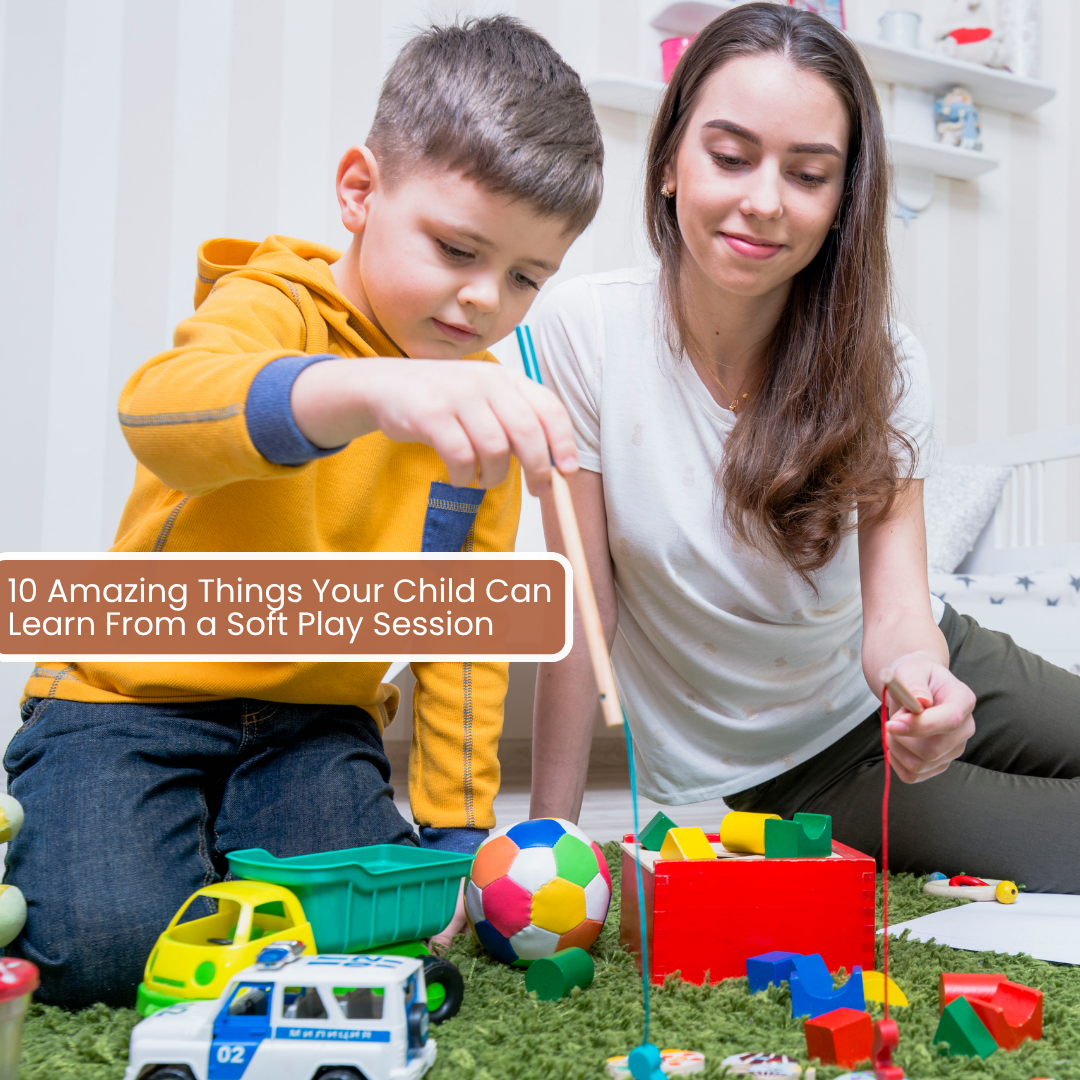
Watch a three-year-old climb across a soft play frame for long enough, and you'll spot the moment it clicks. She's stuck at the top of a climbing wall, unsure whether to go left or right, and for a second she just... stops. Thinks. Then she picks the ladder over the slide, because today she wants a challenge, not a shortcut.
That's not an accident. That's a soft play session doing exactly what it's designed to do.
Parents often assume soft play is simply a way to burn off energy before nap time, and fair enough, it does that brilliantly. But underneath all the giggling, tumbling and shrieking, children are quietly picking up skills they'll lean on for years: balance, physical coordination, patience, confidence, communication, social skills, independence and courage. They're not aware of any of it. They just think they're playing.
Here are ten of the most valuable things your child picks up during a typical soft play session, and why each one matters more than it looks.
10 Things Your Child Can Learn From Soft Play
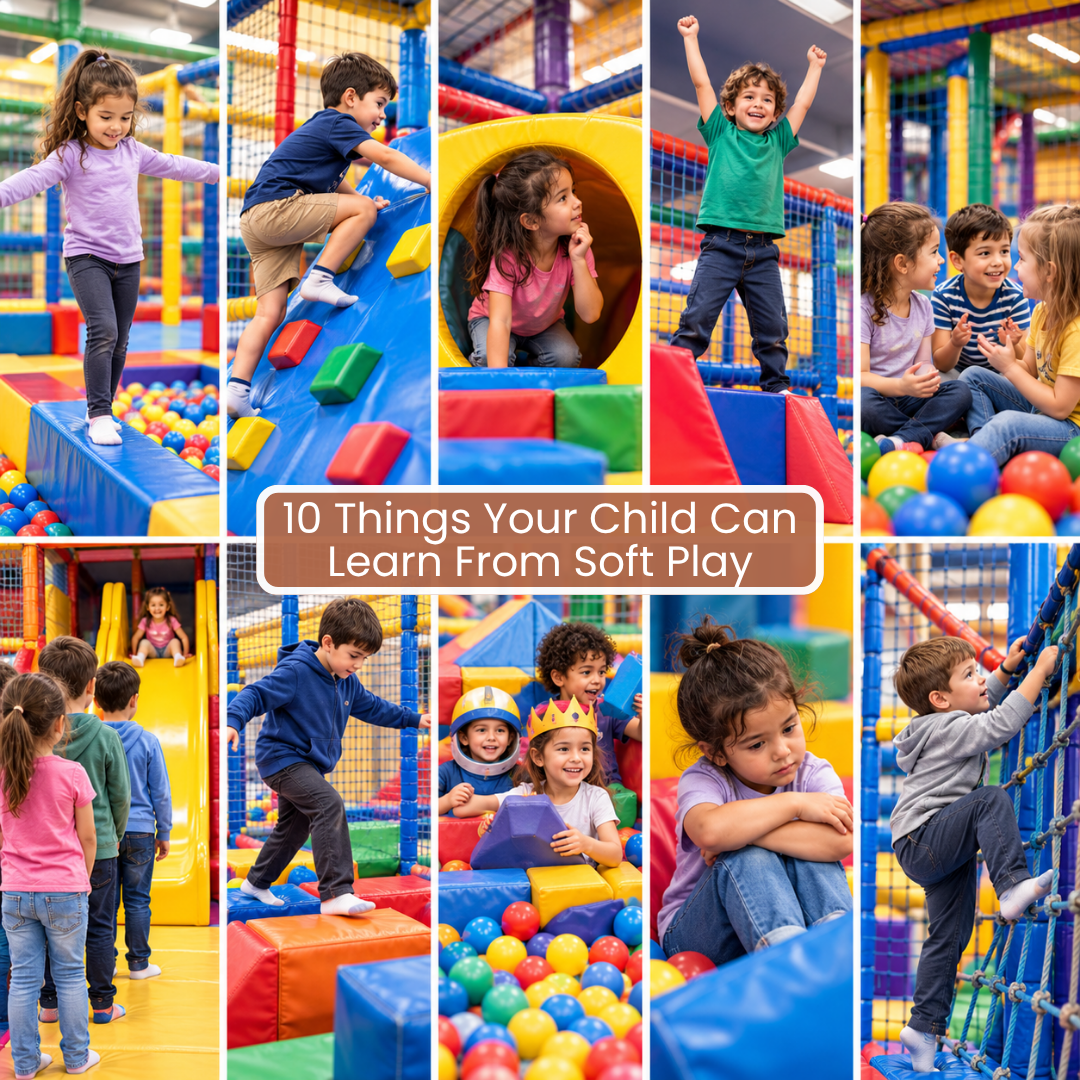
1. Balance and Coordination
Every unsteady step across a soft play zone beam is a tiny physics lesson. Children constantly adjust their weight, shift their arms, and correct themselves mid-stride to stay upright on uneven surfaces, ball pits, and climbing nets.
This kind of unstructured movement builds coordination far more effectively than sitting still ever could. Physiotherapists often point to varied, unpredictable terrain – exactly what a soft play frame provides – as one of the best natural tools for developing balance in young children.
2. Gross Motor Skills
Climbing, jumping, crawling and swinging all rely on the large muscle groups: legs, core and shoulders. Soft play gives children permission to use their whole body at once, which is something a lot of modern indoor life doesn't offer much room for.
A child who climbs regularly develops stronger legs and a steadier core almost without noticing. It's practice disguised as fun.
3. Problem-Solving Skills
Watch a child pause at a fork in a play structure. Slide or tunnel? Climb over or squeeze under? These small decisions, repeated dozens of times in a single visit, sharpen a child's ability to weigh options and commit to a choice.
There's real cognitive work happening here: spatial reasoning, sequencing, and cause and effect. It just doesn't look like "learning" because nobody's holding a worksheet.
4. Confidence and Independence
Reaching the top of a climbing frame for the first time is a genuine achievement, and children know it. That flush of pride when they've done something alone without a parent lifting them or guiding their hand builds real, earned confidence.
5. Communication Skills
Soft play throws children together with strangers their own age, and that means talking. Asking to go first. Explaining a game. Negotiating who gets the ball pit next. These interactions are often clumsy and half-formed, but they're genuine communication practice, the kind that's harder to replicate at home with familiar siblings.
6. Sharing and Taking Turns
Queueing for the slide is, frankly, a masterclass in patience. Nobody enjoys waiting, least of all a four-year-old, but soft play sessions are full of small, low-stakes opportunities to practise exactly that. Children learn that waiting has a payoff. The slide is still there. Their turn comes.
7. Risk Awareness
A soft play like Wonderland play zone is padded and supervised, but it isn't risk-free, and that's a good thing. Children learn to judge whether a jump feels too high, whether they can manage a climb, or whether to ask for help.
This kind of low-level, age-appropriate risk assessment is something children genuinely need to practise. Removing all risk from play doesn't protect children in the long run. It just delays the moment they have to learn how to judge it.
8. Creativity and Imagination
Give a group of children an empty ball pit and five minutes, and they'll invent a game with rules nobody explained and nobody wrote down. Soft play structures become castles, spaceships, obstacle courses, or whatever the story of the day requires. That imaginative leap, turning foam shapes into a whole narrative, is a skill in its own right.
9. Emotional Regulation
Excitement, frustration, and disappointment – soft play sessions bring out the full range, often within the same ten minutes. A child who doesn't get their turn on the slide has to sit with that disappointment, at least briefly, before moving on.
These small emotional bumps, managed in a safe and supervised space, help children build the self-regulation they'll need in bigger settings later, the classroom, for instance.
10. Resilience and Perseverance
Falling short of a climb on the first attempt and trying again anyway is one of the most valuable habits a child can practise. Soft play offers endless, low-stakes chances to fail safely and have another go.
That willingness to try again, not because an adult insisted, but because the child wanted to, tends to carry over into school, sport, and everyday problem-solving.
All that active play can also influence what happens when the day winds down. If you're wondering whether soft play can support better sleep, here's what parents should know about the link between active play and bedtime.
How Does Soft Play Support Your Child's Development?
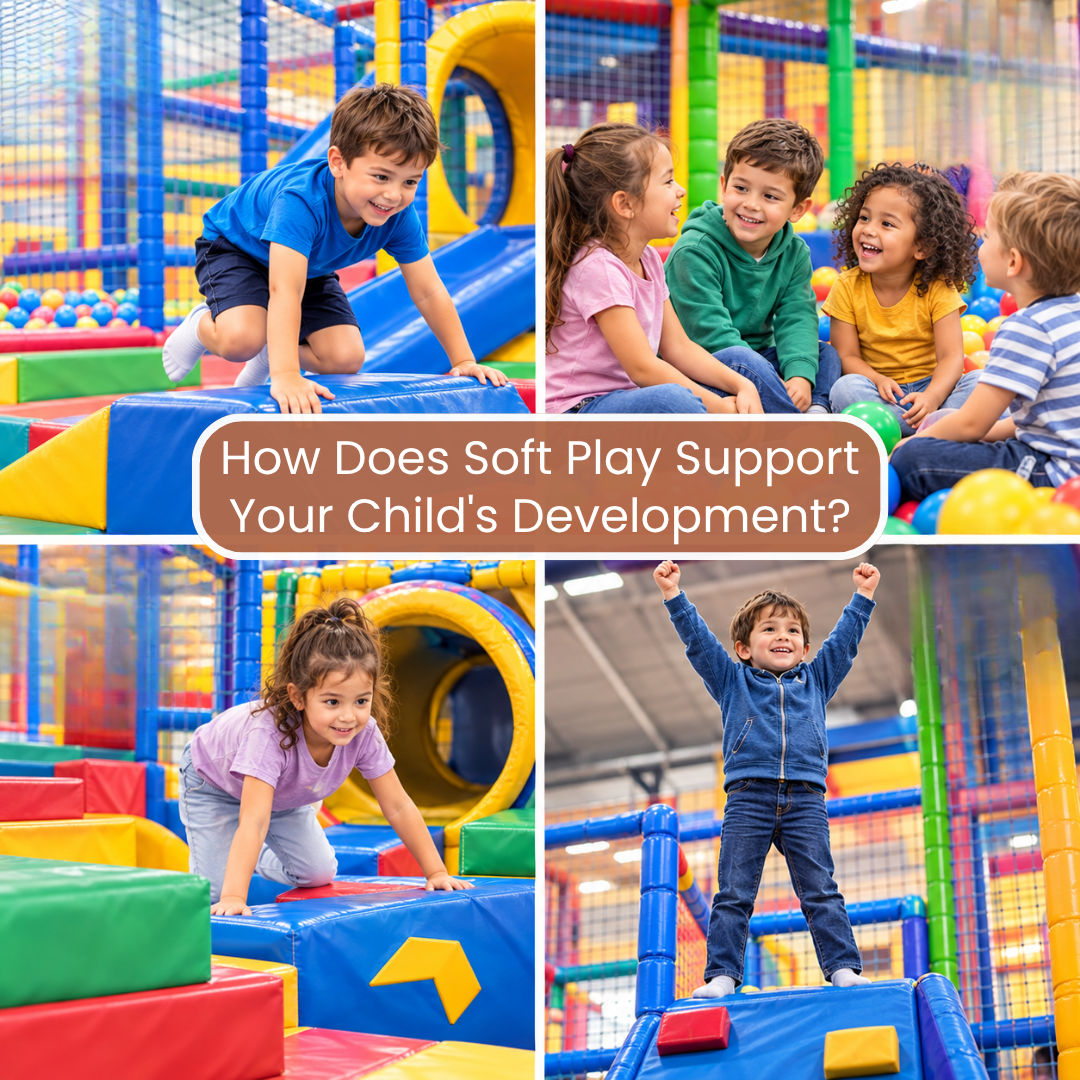
Each of these ten moments feeds into four broader areas of development. It's worth separating them out, because parents often assume soft play is "just physical".
Physical Development
The soft play zone in Exeter builds strength, balance, coordination and flexibility through climbing, crawling, jumping and general active play. It's gross motor development without a single structured exercise.
Social Development
Being surrounded by other children, some familiar and some not, gives kids constant, low-pressure practice at cooperation, sharing and simple negotiation, the groundwork for friendship.
Cognitive Development
Route planning across a frame, working out how a tunnel connects to a slide, deciding what's climbable and what isn't – all of this sharpens spatial awareness, decision-making and an early grasp of cause and effect.
Emotional Development
Confidence, independence and resilience all get a workout here too. A child who's just conquered a climbing wall carries that feeling with them long after they've left the building.
Why Is Soft Play a Great Learning Environment for Children?
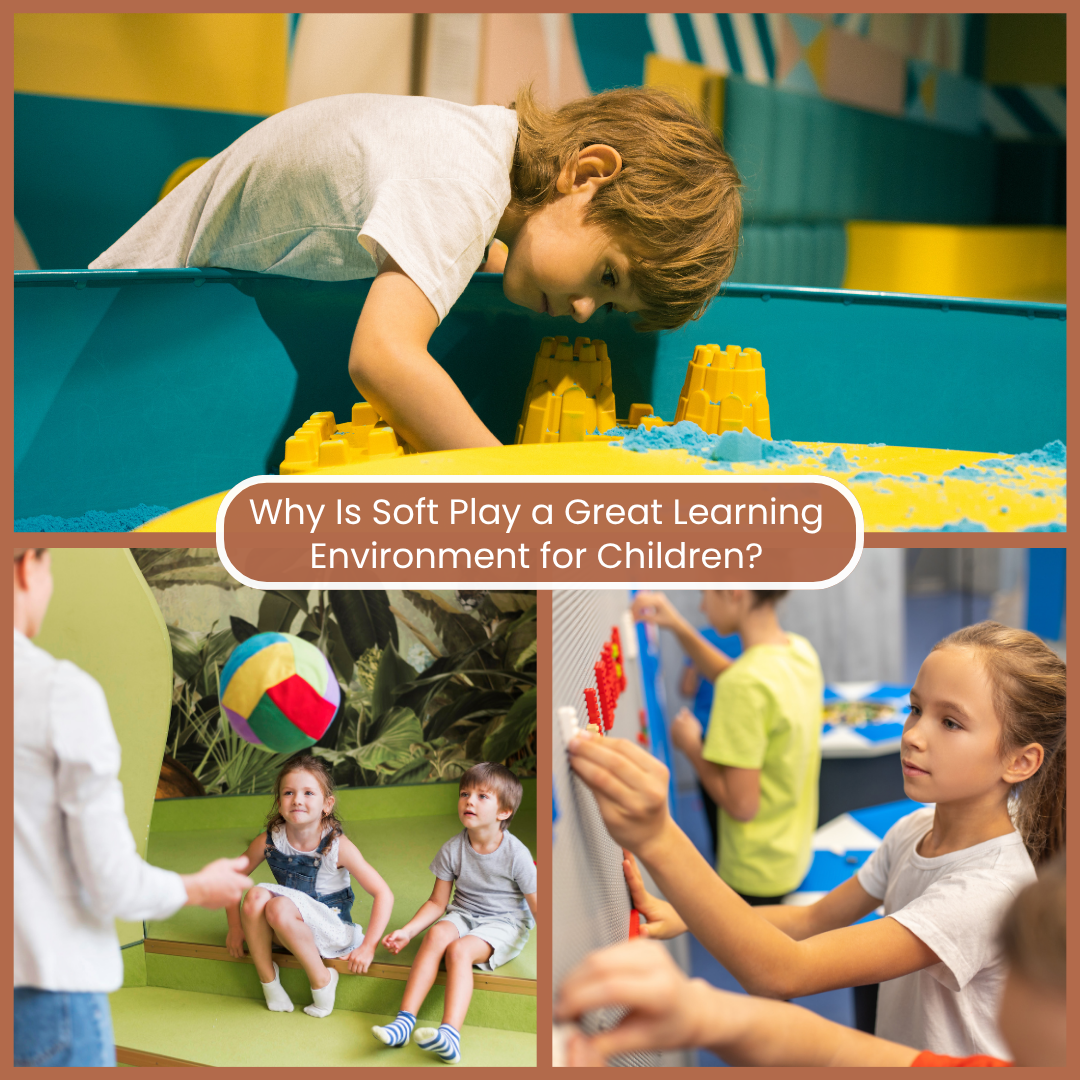
A soft play zone in Newton Abbot gives children a safe, stimulating space to learn through movement, exploration and interaction with others. As they climb, crawl and play together, they can build physical confidence alongside early social, emotional and problem-solving skills.
For example, soft play can support children by helping them:
Learning Through Active Play
Children absorb far more when they're moving and doing than when they're being told. A soft play centre lets a child test an idea physically: will this route work? Rather than simply being instructed.
A Safe Space to Explore
Padded surfaces, enclosed structures and supervised layouts mean children can push their limits without the consequences being severe. That safety net is what allows genuine risk-taking and genuine learning to happen side by side.
Play Alongside Other Children
There's a particular kind of learning that only happens around peers rather than adults. Children copy each other, challenge each other, and occasionally squabble with each other – all useful groundwork for later social settings.
Different Challenges for Different Abilities
A well-designed soft play area offers routes suited to a nervous two-year-old and a fearless six-year-old alike. Children naturally gravitate towards whatever feels achievable that day, then push a little further next time.
Why Parents Should Look Beyond "Burning Off Energy"
It's easy to see a tired, sweaty child at the end of a session and assume that's the whole point. But the tiredness is really a side effect. The real value sits in everything that happened along the way: the decisions, the wobbles, the small victories.
At Wonderland Play, that's the thinking behind how our soft play areas are laid out: varied challenges, safe boundaries, and plenty of room for children to choose their own adventure rather than follow a single fixed path.
How Can Parents Make the Most of a Soft Play Session?
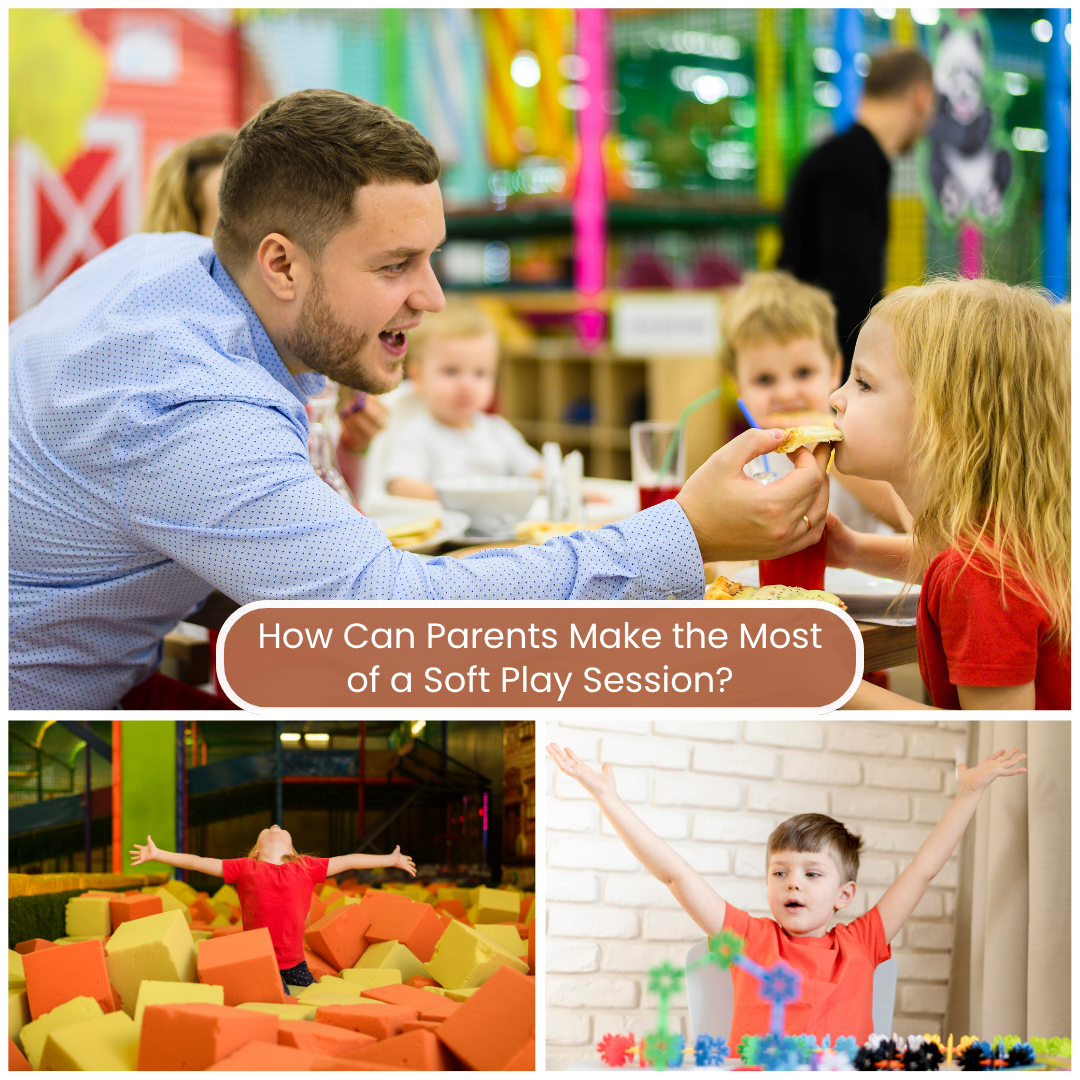
A few small habits can turn a routine visit into a genuinely developmental one.
Let Your Child Explore at Their Own Pace
Resist the urge to steer them towards the "best" bit of the frame. A child who chooses their own challenge gets far more out of it than one who's nudged along.
Encourage Rather Than Take Over
If they're stuck, offer a suggestion rather than solving it for them. "What if you tried the other side?" does more for their confidence than lifting them over.
Use Play to Build Social Skills
If your child is hovering near a group, a gentle nudge, "Why don't you ask if you can join in?" can help without forcing the interaction.
Celebrate Effort, Not Just Achievement
Praising the attempt, not only the success, teaches children that trying matters even when it doesn't work out the first time.
Choose Age-Appropriate Activities
Not every part of a soft play centre suits every age. Most venues, including Wonderland Play, separate areas by age group for exactly this reason: it keeps challenges achievable rather than overwhelming.
Conclusion
Next time you're watching your child disappear into a ball pit for the fifteenth time that afternoon, it's worth remembering: none of that is wasted time. They're practising balance, negotiating with a stranger over whose turn it is next, working out a route, and picking themselves up after a stumble.
They think they're just playing. They're actually building the skills they'll carry into nursery, school, and the rest of their lives.
If you're looking for special play activities for children somewhere your child can do all of that safely, come and see what a session at Wonderland Play looks like. Bring the wellies for the car park at Wonderland and the rest, we've got covered.
Frequently Asked Questions
-
Children develop physical skills such as balance and coordination, cognitive skills like problem-solving and decision-making, social skills including sharing and communication, and emotional skills such as confidence and resilience, often within a single session.
-
Beyond physical exercise, soft play supports gross motor development, social interaction, independence and emotional regulation. It gives children a safe space to test their limits, make choices, and learn from small setbacks without pressure.
-
Yes. Active, hands-on play of this kind supports physical, cognitive, social and emotional development simultaneously. Because children choose their own challenges, they naturally progress at a pace that suits their ability.
-
Being around other children creates constant, low-pressure opportunities to share equipment, take turns, and communicate — asking to join a game, negotiating who goes first, or simply chatting while queuing for the slide.
-
Definitely, completing an age-appropriate challenge, like reaching the top of a climbing frame, gives children a genuine sense of achievement. That earned confidence tends to carry over into other areas of life.