
How to Create a Healthy Bedtime Routine for Children?

Every parent knows the feeling — it is 8:30pm, your child has had a full day, and yet somehow they are still wide awake, negotiating one more glass of water or another five minutes of screen time. Sound familiar?
Building a healthy bedtime routine for children is one of the most valuable things you can do for your child's development, mood, and overall wellbeing. Sleep is not a passive activity. During sleep, children's brains process the day's learning, their bodies grow, and their emotional resilience is restored.
Yet in the UK, sleep problems in children are increasingly common. According to the Sleep Foundation, between 25% and 50% of children experience some form of sleep difficulty at least once during childhood.
Table of Contents
The good news is that most of these problems are preventable — and a well-structured bedtime routine is the most effective solution.
This guide covers everything UK parents need to know — from the science of sleep to practical step-by-step routines, the role of active daytime play, and how to handle common challenges like sleep anxiety and screen time battles.
Why a Healthy Bedtime Routine for Children Matters?
A bedtime routine is far more than a way to get your child into bed. It is a powerful signal to your child's brain and body that sleep is approaching. This predictability creates a sense of safety and calm — both of which are necessary for quality sleep.
Research consistently shows that children with regular bedtime routines:
Fall asleep faster
Wake less frequently during the night
Experience better emotional regulation the following day
Perform better at school and in social situations
Show lower rates of behavioural difficulties
A 2017 study published in the journal Sleep found that children with consistent bedtime routines had significantly better sleep outcomes across all age groups — including toddlers, school-age children, and teenagers.
The benefits extend beyond the child too. Parents in households with established bedtime routines report lower parenting stress and more personal time in the evenings.
What the Science Says About Children's Sleep?

Sleep is regulated by two biological systems: the circadian rhythm (your body clock) and sleep pressure (the build-up of adenosine in the brain the longer you stay awake).
In children, the circadian rhythm is still developing. Young children naturally experience an earlier sleep onset than adults — their melatonin release typically begins between 7:00pm and 8:00pm. This is why fighting an early bedtime is often counterproductive; you may be working against your child's biology.
Key scientific facts about children's sleep:
Melatonin — The sleep hormone released by the pineal gland. Blue light from screens suppresses melatonin production, delaying sleep onset.
Deep sleep stages — The majority of physical growth hormone is released during deep sleep (NREM Stage 3). Disrupted sleep reduces growth hormone output.
REM sleep — Critical for memory consolidation, learning, and emotional processing. Children spend proportionally more time in REM sleep than adults.
Sleep debt — Unlike adults, children cannot simply "catch up" on lost sleep effectively. Chronic sleep deprivation accumulates and affects development.
| Age Group | Recommended Sleep Duration | Typical Bedtime |
|---|---|---|
| Infants (4–12 months) | 12–16 hours (including naps) | 6:30pm – 7:30pm |
| Toddlers (1–2 years) | 11–14 hours (including naps) | 7:00pm – 8:00pm |
| Preschool (3–5 years) | 10–13 hours | 7:00pm – 8:30pm |
| School Age (6–12 years) | 9–12 hours | 7:30pm – 9:00pm |
| Teenagers (13–18 years) | 8–10 hours | 9:00pm – 10:30pm |
The Building Blocks of a Healthy Bedtime Routine
A well-designed routine does not need to be elaborate. What matters is consistency and sequence. The following framework works for children aged 2–12 and can be adapted to suit your family's needs.
Step 1 — Wind-Down Begins 30–45 Minutes Before Bed
The transition from active play to sleep does not happen instantly. Start the wind-down process by:
Turning off screens (TV, tablets, smartphones, gaming consoles)
Reducing lighting in common areas — dimmer lights signal the brain to increase melatonin
Moving from loud, energetic activities to quiet, calm ones
Playing soft background music or nature sounds if your child is stimulated by silence
Step 2 — A Warm Bath or Shower
A warm bath 30–60 minutes before bedtime triggers a drop in core body temperature as the child exits the bath. This temperature drop is a powerful physiological signal for sleep. Studies show that a bath at 40–42°C taken 1–2 hours before bedtime reduces sleep onset time by up to 10 minutes.
For toddlers, bath time can also form a reliable sensory cue — the smell of bubble bath, the warmth of the water, and the routine of getting dried and into pyjamas all become associated with sleep over time.
Step 3 — Pyjamas, Teeth, and Toilet
These three practical steps are important not just hygienically but as a ritual. Keep the order consistent every night. Predictability is the point — even these mundane steps contribute to the brain's wind-down signal.
Step 4 — Quiet Time and Bedtime Reading
Bedtime reading is one of the most evidence-backed elements of a healthy sleep routine for children. It:
Reduces cognitive stimulation compared to screens
Encourages emotional connection between parent and child
Supports language development and literacy
Provides a clear, enjoyable signal that sleep is near
For younger children, picture books work well. For older children (7+), a chapter of a novel they enjoy can serve the same purpose. Aim for 10–20 minutes of reading, ending with the book closed and lights dimmed.
Step 5 — A Brief Check-In or Conversation
Many children experience a surge of thoughts and feelings at bedtime. Rather than allowing this to delay sleep through repeated calls for attention, build a brief check-in into the routine. Ask your child:
"What was the best part of your day?"
"Is there anything on your mind?"
"What are you looking forward to tomorrow?"
This gives your child a dedicated moment to share, which reduces the likelihood of anxiety-driven stalling at lights-out.
Step 6 — Lights Out with a Consistent Farewell
Keep your goodnight the same each night. A predictable farewell phrase "Sleep tight, see you in the morning" — becomes a powerful sleep cue over time. Avoid re-entering the room for non-urgent reasons, as this reinforces the behaviour of calling out.
Common Bedtime Routine Mistakes Parents Make
Even well-intentioned routines can be undermined by a handful of common errors:
Inconsistent timing — The single biggest disruptor of children's sleep. Going to bed 90 minutes later on weekends throws the circadian rhythm off significantly.
Screen time too close to bedtime — Devices in the bedroom, or screen use within the hour before bed, reliably delays sleep onset.
High-stimulation activities late in the evening — Rough-and-tumble play, exciting video games, or emotionally intense TV shows activate the stress response and make winding down very difficult.
Large meals or sugary snacks close to bedtime — Digestion elevates core body temperature, which opposes the sleep-promoting temperature drop. A light snack (banana, warm milk, wholegrain crackers) is fine; a full meal is not.
Parental anxiety around sleep — Children are highly attuned to parental stress. If you approach bedtime with frustration or anxiety, your child absorbs that energy. A calm, confident approach matters.
Skipping the routine during holidays — Many parents relax the routine during school holidays or trips away. This is understandable, but even a loose version of the routine (bath, pyjamas, story, lights out) maintains the habit.
How Does Daytime Activity Affect Nighttime Sleep?
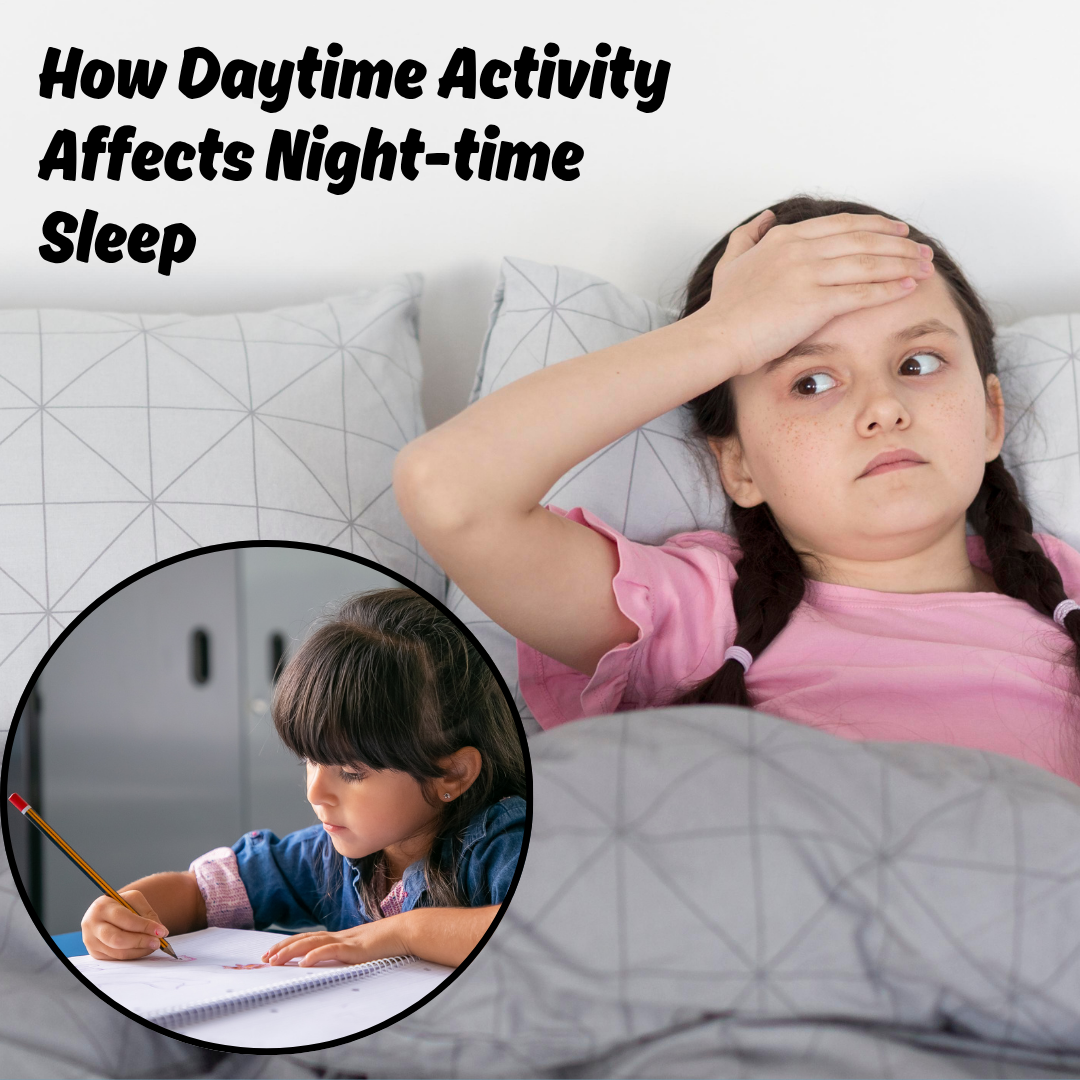
This is one of the most underappreciated aspects of children's sleep. What your child does during the day has a direct impact on how easily they fall asleep at night.
Physical activity increases sleep pressure — the biological drive to sleep — and promotes deeper, more restorative sleep. Children who are physically active during the day:
Fall asleep faster at night
Experience longer periods of deep sleep
Wake less often
Have better mood and focus the following day
The UK's Chief Medical Officers recommend that children aged 5–18 accumulate at least 60 minutes of moderate-to-vigorous physical activity every day. For children under 5 who are walking, at least 3 hours of physical activity spread throughout the day is recommended.
What Counts as Sufficient Daytime Activity?
Outdoor play in the garden or park
School PE lessons and playtime
Cycling, swimming, or after-school sports clubs
Kids indoor play activities at dedicated play facilities
Dancing, gymnastics, or martial arts classes
Crucially, timing matters. Vigorous exercise within 1–2 hours of bedtime can delay sleep rather than promote it, as it elevates heart rate and core temperature. Aim for physical activity earlier in the afternoon.
The Role of Soft Play Zones and Kids Indoor Play Activities

On days when outdoor play is not possible — as is frequently the case in the UK, particularly during autumn and winter — indoor play facilities provide an excellent alternative for burning energy in a safe, stimulating environment.
Soft play zones are purpose-built indoor play environments designed for children of various ages. They typically feature climbing frames, slides, ball pools, foam obstacles, and sensory play areas. For young children especially, an hour or two at a soft play zone provides:
Vigorous physical activity that increases sleep pressure
Sensory stimulation that supports neurological development
Social interaction with other children
A structured environment that reduces parental supervision stress
Wonderland Play Zone — A Local Example
For families in Devon and the surrounding area, Wonderland Play Zone offers a fantastic indoor play environment designed with children's physical and sensory development in mind. As a soft play zone in Exeter and the wider region, Wonderland provides the kind of active, imaginative play that directly supports healthy sleep patterns.
A morning or afternoon visit to a facility like Wonderland Play Zone — one of the leading soft play zones in Newton Abbot — can make the bedtime routine considerably easier. Children who have had a physically and mentally stimulating day settle more quickly, fall asleep faster, and sleep more soundly.
The combination of structured play activity during the day and a consistent bedtime routine in the evening is genuinely one of the most effective strategies for improving children's sleep.
Conclusion
Creating a healthy bedtime routine for children is not about strict rules or perfect parenting — it is about consistency, calmness, and understanding your child’s natural sleep needs. When bedtime becomes predictable and reassuring, children feel more secure, fall asleep faster, and enjoy deeper, more restorative rest.
From switching off screens early to maintaining a calming sequence of bath time, reading, and quiet conversation, every small step plays a powerful role in preparing your child’s body and mind for sleep. Combined with regular daytime physical activity, these habits help build a strong foundation for better mood, behaviour, learning, and overall development.
Most importantly, remember that sleep is a long-term habit, not an overnight fix. Even small improvements in your child’s routine can lead to noticeable changes in their energy and wellbeing.
By staying consistent and patient, you are not just improving bedtime — you are supporting your child’s health, happiness, and growth every single day.
Frequently Asked Questions
-
A healthy bedtime routine for children is a consistent sequence of calming activities carried out in the same order each night, starting 30–45 minutes before the target sleep time. It typically includes turning off screens, a warm bath, brushing teeth, putting on pyjamas, bedtime reading, and a brief check-in conversation. Consistency of timing and sequence is more important than any individual element. Most child sleep experts recommend starting the routine at the same time every night, including weekends.
-
Recommended bedtimes vary by age. Toddlers (1–2 years) generally sleep best when in bed between 7:00pm and 8:00pm. Preschool children (3–5 years) typically need to be in bed between 7:00pm and 8:30pm. School-age children (6–12 years) do well with bedtimes between 7:30pm and 9:00pm, depending on their school start time and sleep needs. The NHS recommends that school-age children get 9–12 hours of sleep per night.
-
For most children aged 2–10, a bedtime routine should take between 30 and 45 minutes from start to finish. This includes wind-down time, bath, hygiene tasks, and reading. Routines significantly longer than this often signal that a child is overtired or that elements of the routine have become extended through habitual negotiation. Keeping the routine predictable and time-bound helps children understand the sequence and settle more quickly.
-
Yes. Physical activity is one of the most effective natural sleep aids for children. Active play during the day increases sleep pressure, supports deeper sleep, and reduces the time it takes to fall asleep. Kids indoor play activities — including soft play zones, outdoor play, swimming, and sports — all contribute to better sleep. The UK Chief Medical Officers recommend at least 60 minutes of moderate-to-vigorous activity per day for children aged 5–18.
-
No. The consensus among paediatric sleep specialists and organisations including the NHS, the American Academy of Pediatrics, and the Royal College of Paediatrics and Child Health is that children should not have screens in their bedrooms. Screen use in the bedroom is strongly associated with later sleep onset, reduced total sleep time, and poorer sleep quality. Devices should be charged overnight in a communal room, away from the bedroom.