
How Can You Support Your Child in Developing Eye-Ear Coordination?
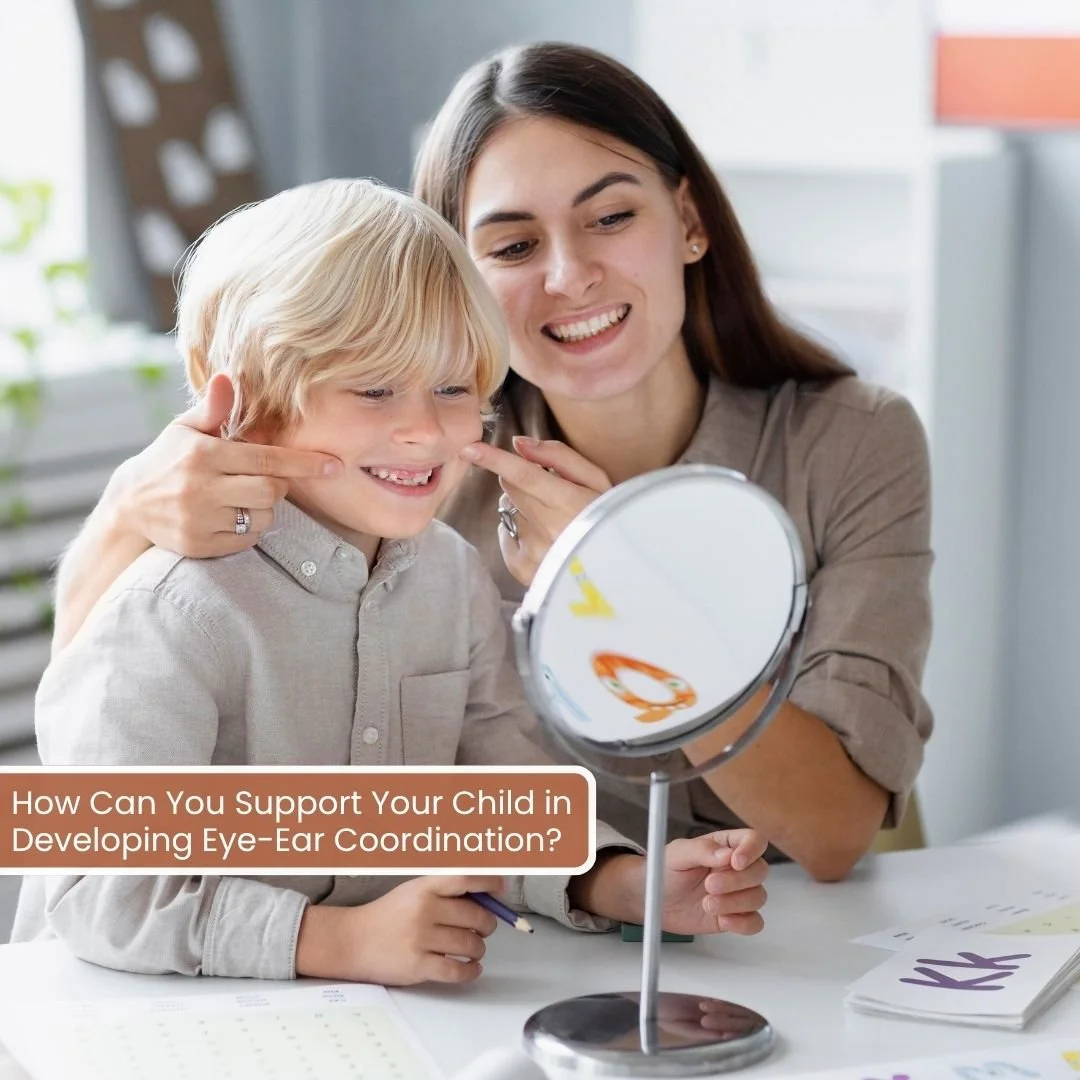
Your toddler hears you call from the kitchen, spins round to find you, then toddles over grinning. It looks like nothing much. Actually, it's a clever bit of brain development.
That moment is eye-ear coordination in action, and it's worth understanding if you're raising a young child. This piece explains what the term actually means, why it matters more than you'd think, and how to build it into daily life without turning play into a lesson.
You'll find easy games for the living room, the garden, and rainy afternoons when nobody wants to leave the house. We'll also look at how soft play centres bring these skills together almost by accident, through climbing, listening, and dodging other excitable children.
What is Eye-Ear Coordination, and Why Does It Matter?
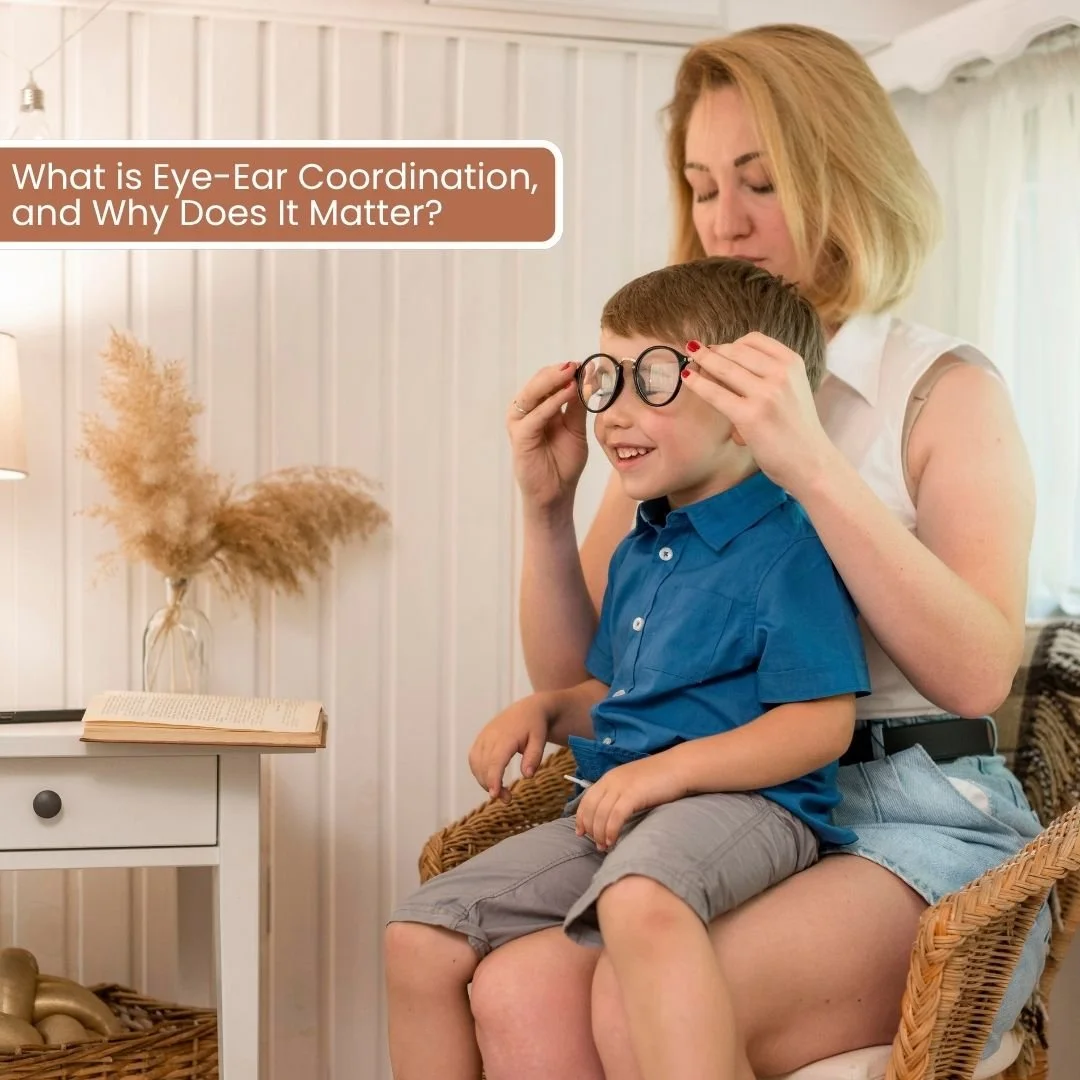
Eye-ear coordination is the brain's habit of linking what a child hears with what they see so they can work out what's going on and respond sensibly. A dog barks, the child looks towards the sound, then decides whether to approach or step back. It sounds simple, but it matters. But that quick loop of hear, look, understand, act is happening constantly, and it supports a lot of what we think of as "being aware of your surroundings".
Understanding Eye-Ear Coordination in Children
Your child at the park hears a ball bounce nearby and turns to watch it roll. Their ears picked up the sound first, their eyes then located the source, and their brain joined the two pieces of information together. Sound gives direction and warning. Sight confirms and adds detail. Put together, they build a much fuller picture than either sense could manage alone.
How Does It Support Everyday Skills?
This isn't a complicated skill explained in a textbook. It shows up constantly:
Following soft play activities and spoken instructions while doing something else, like tidying up
Working out where a sound is coming from before reacting
Moving safely through a busy space, such as a soft play frame or a school corridor
Taking part in group games that need quick reactions
Responding to a shout or warning while running or climbing
Building a general sense of where their body is in relation to other things
A child who's had lots of practice at this tends to cope better in noisy, busy environments. Nurseries and soft play zone for toddlers are exactly that.
When Do Children Develop These Skills?
There's no single date on the calendar when this "switches on". Children build these connections gradually, through thousands of small, repeated experiences, and the pace varies a fair bit from one child to the next. Some three-year-olds will spin round instantly at the sound of their name, and others take a bit longer to tune in, especially if they're deep in concentration. Neither is cause for alarm on its own. What matters more is giving children plenty of chances to practise, which brings us to the fun part.
Simple Ways to Help Your Child Practise Eye-ear Coordination
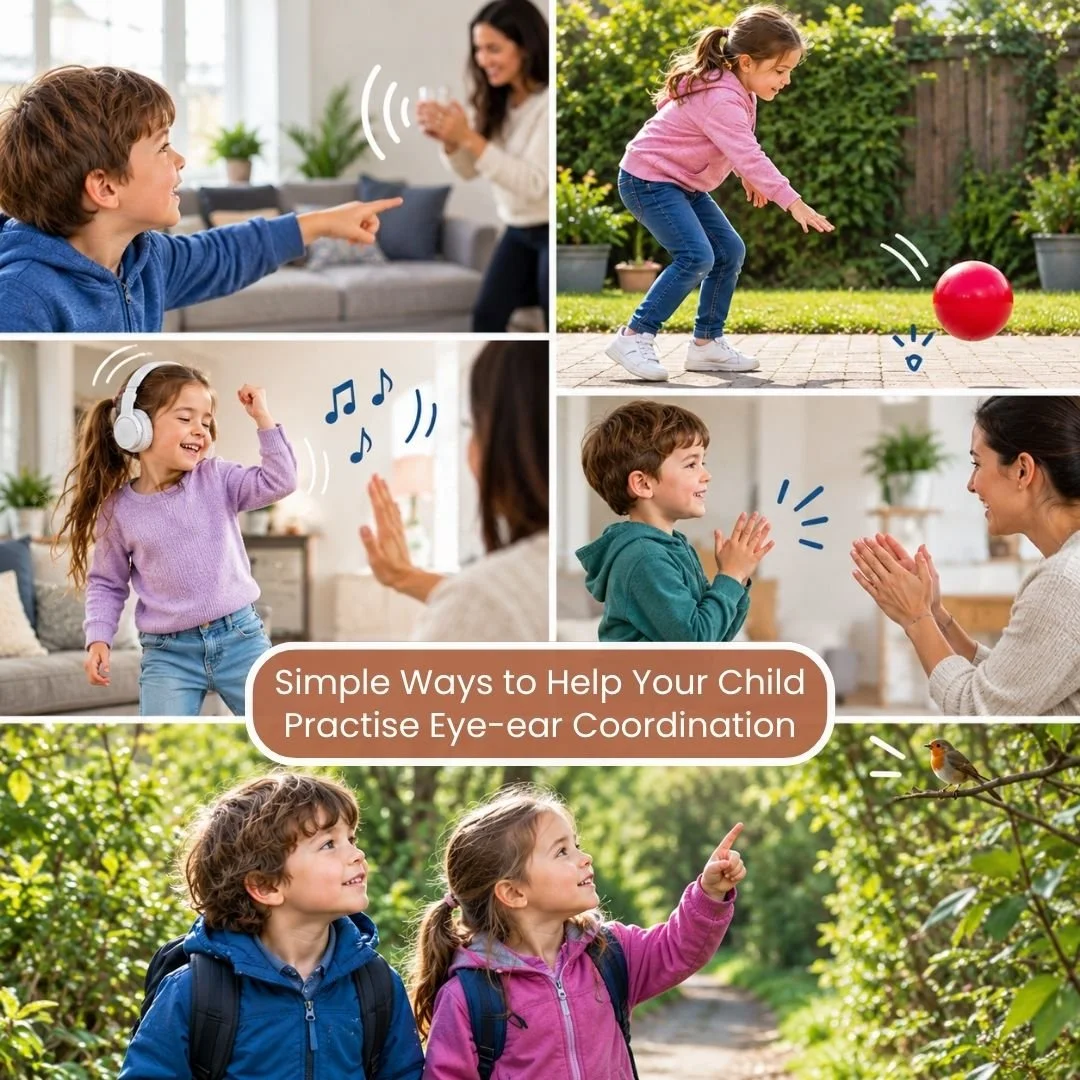
None of this needs special toys or a training plan. Five minutes here and there, worked into the normal chaos of family life, does the job. Here are some games that parents and carers reach for again and again, because they actually work, and children ask for them by name.
Play "Where Did That Sound Come From?"
Stand a little way from your child and make a gentle noise, perhaps a clap, a shaken box of raisins, or a tap on the table. Ask them to point or look towards where it came from. Keep your voice playful rather than testing them like it's an exam. Move your position each round so they can't just guess based on habit.
Try Ball Games With Sound
Roll or bounce a ball while adding a sound, tapping it against the floor, or calling "go!" as you release it. Ask your child to watch where it travels and listen for the bounce. You can slow this down for younger children or speed it up as their reactions sharpen. It's an easy one to play in a small garden or even a hallway.
Follow the Music
Put on a song, encourage your child to move however feels natural, then pause the track and shout "freeze!" Restart at a different tempo to keep them guessing. This one combines listening for the change, watching your reactions, and controlling their own body all at once, which is quite a lot for a small brain to juggle, and that's exactly why it's useful.
Copy the Action
Clap twice, stamp your foot, or tap the table, then ask your child to repeat it back. As they get more confident, they string together short sequences, like clap-clap-stamp. You can play in the car while travelling or in a waiting room, since it needs no equipment at all.
Make Outdoor Sounds Part of Play
On a walk, stop and listen together. A car passing, a bird overhead, footsteps behind you. Ask your child where they think the sound came from and encourage them to look for it. Children who spend a lot of time indoors sometimes find outdoor sounds surprisingly overwhelming at first, so this is a gentle way to build familiarity.
These games work best when worked into normal routines rather than scheduled like homework. A quick round while waiting for toast to pop, or during bath time, is often more effective than a formal ten-minute session, simply because the child isn't aware they're "practising" anything.
How Can Soft Play Help Develop Eye-Ear Coordination?
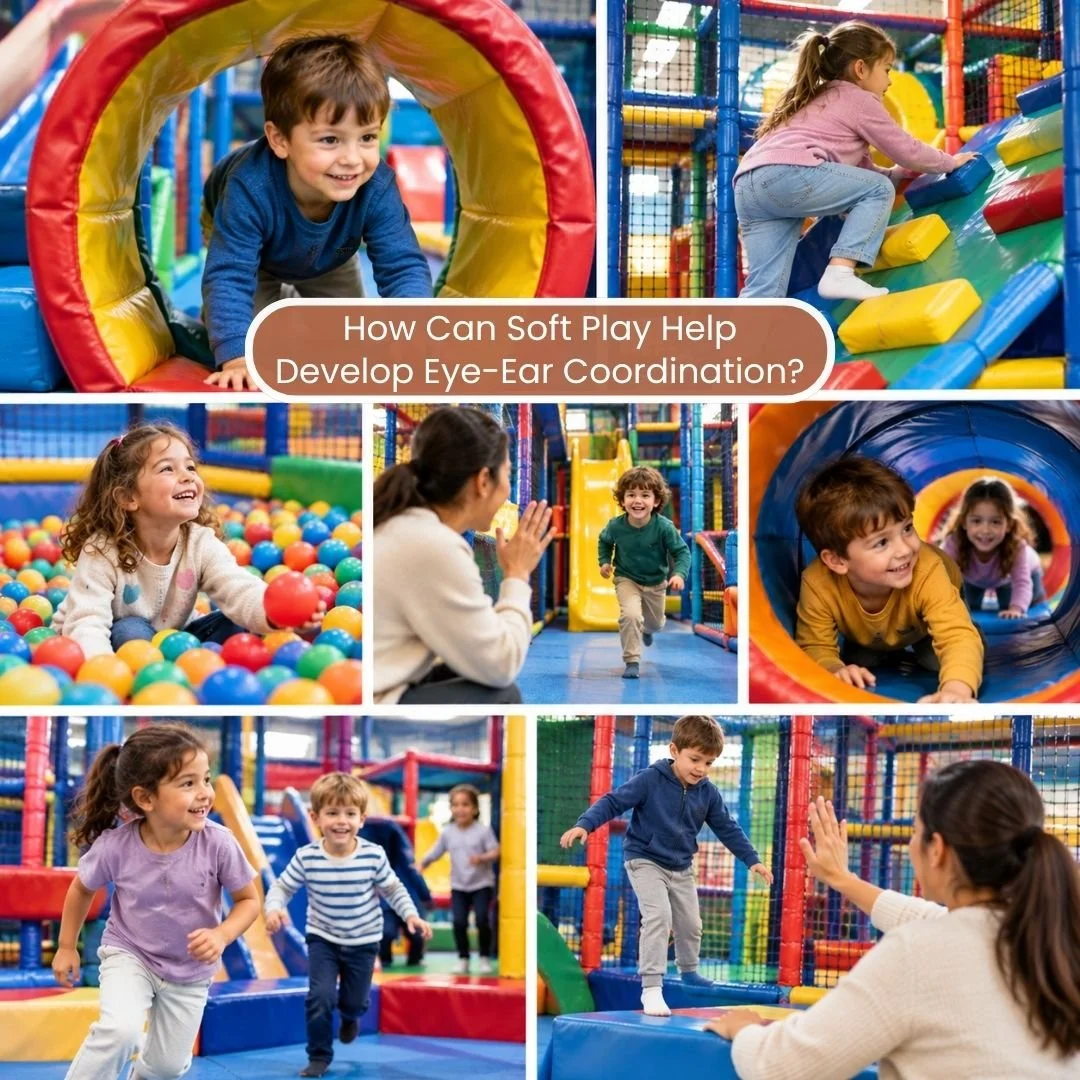
Soft Play Zone in Exeter are full of opportunities for this kind of development, and most parents don't realise it while their child is having a wonderful time on the slide. Climbing frames, ball pits, and tunnels ask children to constantly judge distance, listen for instructions over background noise, and react to other children moving unpredictably around them. It's sensory input from every direction at once, which is precisely the kind of environment that builds these connections.
Moving While Listening
A parent calling "this way" or "wait for me" from across a soft play frame gives a child real practice at processing an instruction while their body is still in motion. That's a genuinely different skill from sitting still and listening, and it's one children get very little chance to practise anywhere else.
Climbing, Crawling and Finding the Way
Working through a soft play zone in Newton Abbot structure means constantly judging where to put hands and feet, often while looking ahead to the next section. Add in the shouts and giggles of other children, and a young visitor is stitching together visual judgement with a fair bit of background noise filtering, without ever thinking about it as "training".
Playing Around Other Children
Turn-taking on a slide, or a quick game of chase through the tunnels, means watching what other children are doing while also listening for their voices and footsteps. It's a sociable, slightly chaotic way to practise coordination, and children rarely notice they're learning anything at all.
Making Play More Challenging as They Grow
As confidence builds, instructions can get a bit more layered. Start with "stop". Move on to "stop and clap". Later, try "jump when you hear the whistle". Keep it age-appropriate and always supervised, but don't be afraid to add a bit more complexity once your child is clearly ready for it.
Once your little one's getting the hang of these bigger physical games, it's worth balancing things out with quieter, hands-on play too. Gross motor skills are only half the picture — those small, fiddly movements matter just as much for everyday independence, from doing up buttons to holding a pencil properly. If you're after some ideas, these fine motor skills activities are a great place to start.
Conclusion
Eye-ear coordination isn't something you need a specialist to develop. It grows through ordinary, slightly noisy, occasionally chaotic play, the kind most families are already doing without realising its value. A game of freeze dance in the kitchen, a shout of "over here!" at the park, or an afternoon spent climbing and crawling around a soft play frame all quietly do the job. The trick is simply giving children plenty of chances to hear, look, and respond, then letting them enjoy themselves while they do it.
If you fancy giving your child a properly fun way to combine movement, sound and sensory play, a visit to your nearest Wonderland Play Zone is a good place to start, particularly on a day when the UK weather isn't playing along.
Frequently Asked Questions
-
It's the brain's ability to combine what a child hears with what they see, helping them understand and respond to what's happening around them. For example, hearing footsteps and then turning to look before deciding what to do next. It develops through repeated, everyday experiences rather than formal training.
-
Simple games work best: sound-finding activities, ball games that combine movement with noise, freeze dance, and copy-the-action games. Outdoor listening walks are also effective. The key is regular, playful practice rather than structured exercises, since children learn these skills more readily when they're enjoying themselves.
-
It underpins everyday abilities such as following instructions, locating sounds, moving safely around others, and reacting quickly during group games. Children with good coordination between these senses often cope better in busy, noisy environments like nurseries, playgrounds, and school corridors.
-
Yes. Climbing, crawling, and navigating through soft play equipment ask children to judge distance and movement while listening to instructions and other children around them. This combination of physical activity, sound and visual tracking makes soft play a genuinely useful setting for practising these skills.
-
Many children with sensory sensitivities enjoy soft play, though busy or noisy centres can occasionally feel overwhelming for some. Visiting during quieter periods, taking breaks, and letting your child set the pace usually helps. If in doubt, speak to staff about quieter session times.